


Believe it or not, we are already 100 days into the Mamdani administration. And while the headlines of the first 100 days have been dominated by the City budget gap and perhaps overshadowed by troubling federal policies, City agencies have been laying the foundations for much of the work that will result in headlines over the rest of Mamdani’s term.

On the 101st day mark (April 7th), members of the Mamdani transition teams, as well as current members of the administration, spoke about lessons learned from the first 100. While these panelists represent only a small part of the many initiatives and policies begun by the Mamdani administration since early January, their discussion provides insights into how current leaders are addressing urgent city issues.
Learning how they are thinking about and tackling policies in their domain is also a useful translation to other domains the City is grappling with, from the rapidly occurring effects of AI to top-down cultural changes driving new collaborations.
Below are takeaways from the panel discussion, along with data-driven insights I added for each section. You can find more information and context on all the charts below at the NYCuriosity data portal here.
Meg Egan | First Deputy Commissioner, NYC Department of Correction (DOC)
DOC is behind schedule on closing Rikers Island jails, partly because the previous administration was resisting this effort. The department is working on getting back on track with the construction of the four borough jails – in the Bronx, Brooklyn, Queens, and Manhattan – and care centers that will replace Rikers. The plan to build the borough jails is a massive, massive urban planning project.
Rikers Island jail, as the name reveals, is located on an island extremely difficult to access from the rest of NYC. Moving the population to facilities located more centrally across four of the city’s boroughs will reduce the burden on inmates’ families for visitations and spread the population across the City. Given its notorious reputation of cruelty and corruption, the hope is that the move to new facilities will also reinstitute healthier institutional cultures and improve safety.
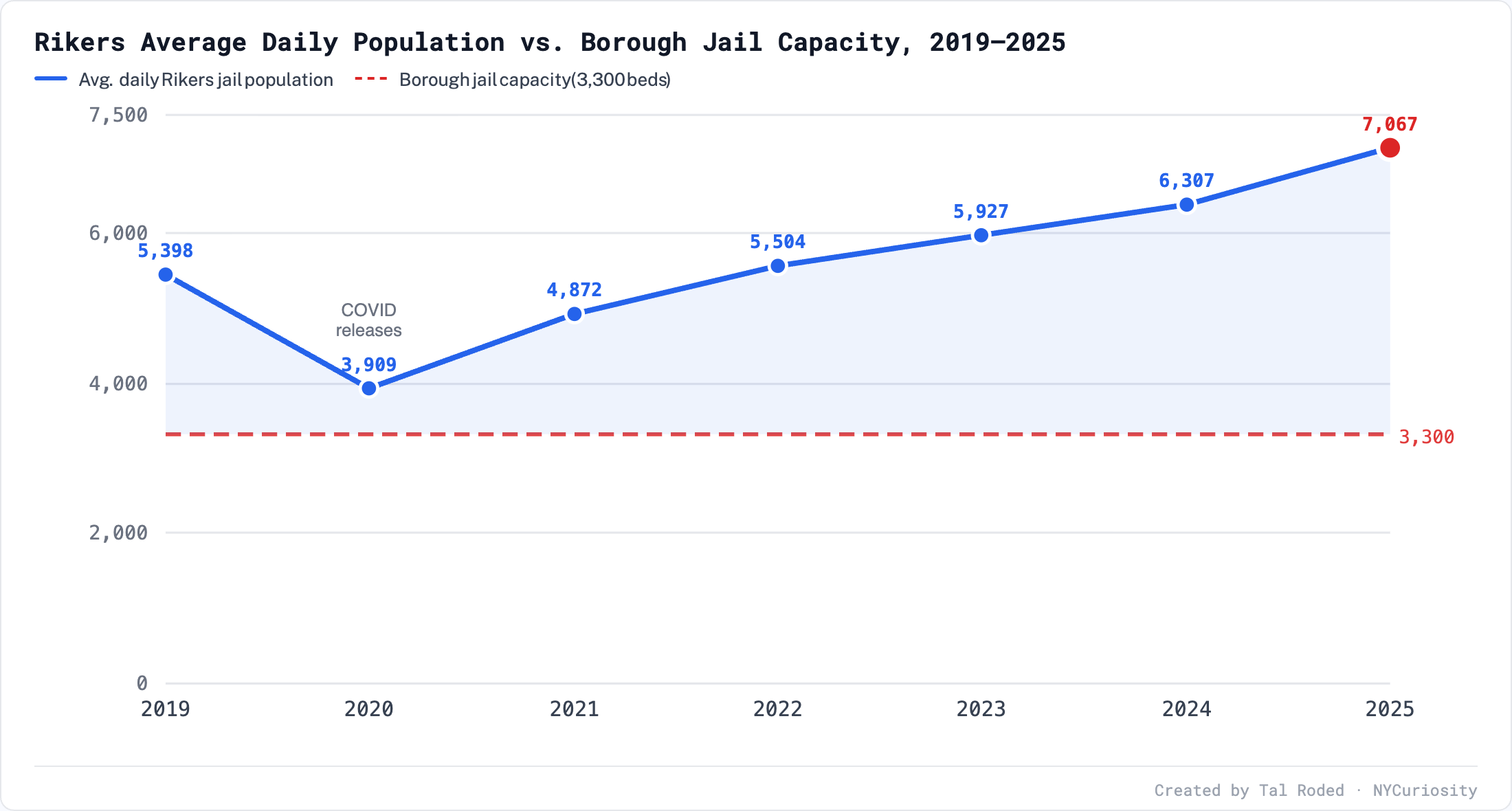
However, there are also some concerns raised about the four new facilities. For one, the current population of Rikers is estimated to be somewhere around double the capacity of the new buildings. The total NYC jail population will have to be reduced, or inmates found alternative facilities (like rehabilitation or mental care-focused institutions), to conduct a successful move.
There are dueling takes on whether such a reduction and rehousing of the current population is achievable on the planned timeline (yes, no). What is certain is that a more expansive view of rehabilitation will be required, with treatment for medical conditions and mental illness playing a large role. Mayor Mamdani has made progress on this front with the recently established Office of Community Safety.
The current population of Rikers is too high for the number of beds in the new jails being constructed. DOC will need to bring in all of the City government and State partners to not only make the math work, but to achieve safety goals. While the new jail buildings will be better designed to care for people, the long-term solution for replacing Rikers is building community support capacity and re-engineering the legal system to funnel people to the appropriate care facilities. DOC and the City generally need a systematic and holistic approach, not just checking the boxes and meeting minimum requirements.
People who enter the DOC come in with good intentions to do good work, but face past mismanagement and a difficult current situation at Rikers. Making DOC a good place to work will bring in new workers and improve conditions all around. DOC is also very siloed, to the detriment of both the agency and the City. A multi-agency coalition is needed to tackle DOC’s goals and objectives.
Eric Goldwyn | Program Director, Clinical Professor, Marron Institute of Urban Management
The report his group recently published, A Better Billion, reimagines using the $1 billion price tag for free buses proposed by Mayor Mamdani with an alternative plan to expand the subway and build more housing. He sees this as a better use of funds for supporting the long-term goal of making New York a more affordable city.
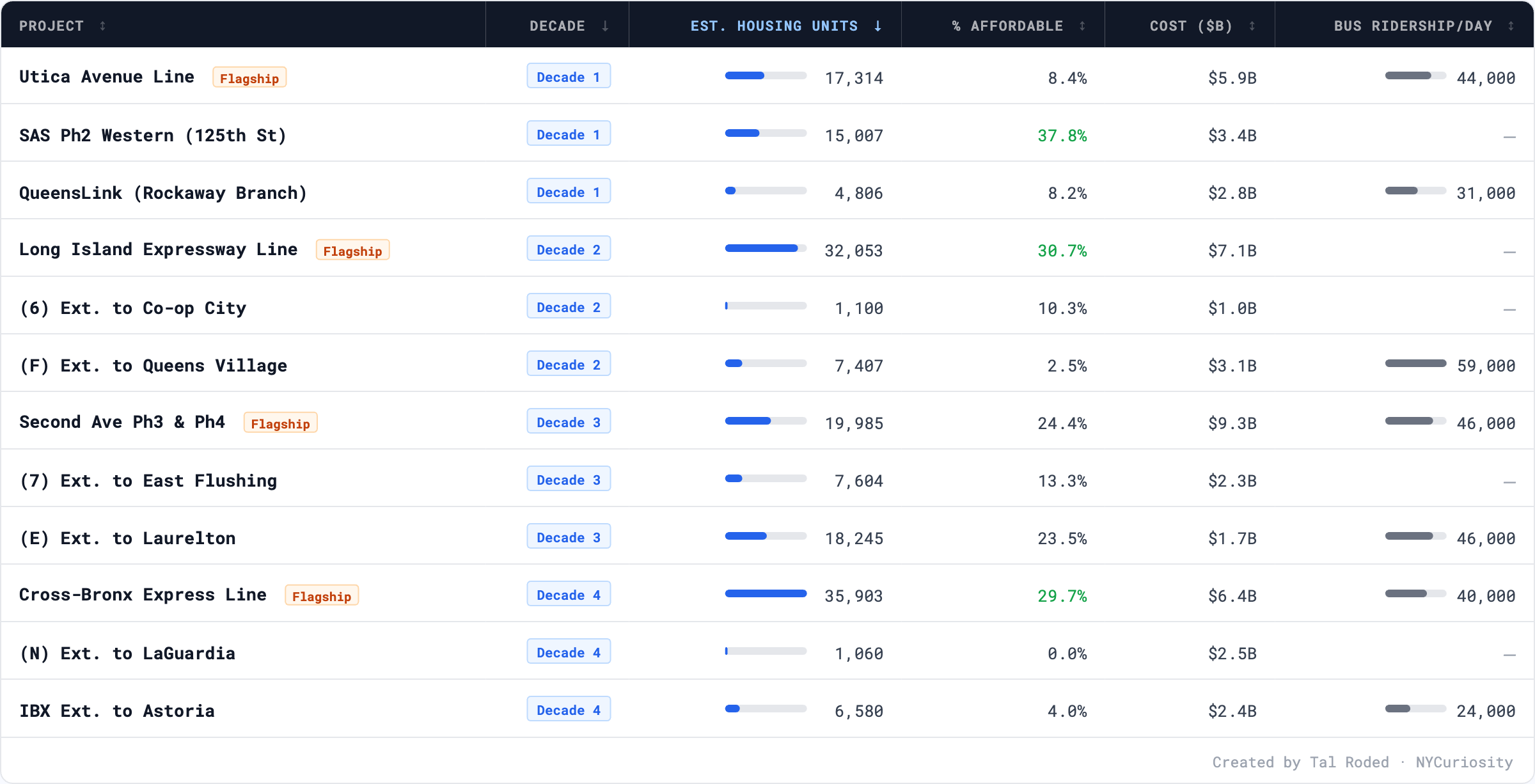
A Better Billion proposes “12 distinct projects that would extend the subway by 41 miles and 64 new stations across Manhattan, Brooklyn, Queens, and The Bronx” - to be built over the next 40 years. The authors of the report estimate that carrying out all 12 projects would cost about $48 billion (2025 dollars), which after standard federal funding matches, would cost the City a bit less than $1 billion per year. This equals the expected annual cost of making MTA buses free.
The recommended expansions of the subway system would have follow-on effects that could lead to more housing development and save NYC residents in other costs, like not needing to own a car to live in outer Brooklyn or Queens. Improved accessibility in the affected neighborhoods could also spur job growth desperately needed and bringing in new tax revenue.
There is too much detail and too many interesting ideas to cover, all of which deserve a post of their own. But the bold proposals of this report are exactly the kind of ambitious urban transportation planning that NYC has been lacking and that I have been hoping for more of. Whether you agree that all the projects in the report are actually as feasible at the costs the authors estimate or not, they are all worth receiving as much attention as free buses have thanks to Mamdani.

Subway expansions were proposed with two major goals in mind: 1) where do we have busy buses with no subway support, and 2) where do we have the largest potential for new housing. 167,00 new units of housing could result from the proposed subway expansions, with no zoning changes required whatsoever.
His report prioritized corridors with busy buses - making the Utica Avenue subway one of the biggest priorities. The Cross-Bronx Express line would activate a lot of housing potential and relieve another very busy bus route. The 125th Street extension is another big opportunity. The Long Island Expressway could have the biggest overall impact.
Gregory Morris | CEO, NYC Employment and Training Coalition
New jobs in NYC have largely been found within the healthcare and social assistance space. Tech, finance, retail, hospitality have all not bounced back since COVID or are still struggling. AI is impacting first entry-level jobs, and now potentially all white collar work, so the new jobs that are being created are largely found in low-wage occupations. Not much good news for the job market across industries – the City needs to figure out how to cut costs, such as on housing, to make NYC more affordable for low-wage workers.
NYC’s Job Growth Has a Quality Problem

There are nearly 4.9 million jobs based in NYC, of which about 4.2 million are in the private sector (i.e., not government jobs). And yet, in 2025, NYC only added 33,400 new private sector jobs. Even worse, through the first half of 2025 there were 4,600 fewer businesses
Regardless of the industry, employers largely say the same thing: planning for the future has gotten harder as things move faster, and they want project managers. Surveyed employers all say they need workers who can work independently, collaborate with peers, and come up with plans for achieving objectives. While AI is changing the landscape by the hour, these skills – and social capital – will continue to matter. If credentials matter less now, then who you know and your own ability to get tasks done matter even more.
NYC needs to figure out how to invest in the intersection between economic development and workforce development. No matter what people are building, the City needs to enable them to do the building. This involves enabling social capital for individuals located here and facilitating relationship building.
Attracting medium- and high-income jobs to the City will be a critical policy to sustain the tax base and prevent massive budget gaps or safety net program cuts in the future. NYC desperately needs job growth in its traditionally strong industries like Finance and Professional Services, while nurturing emerging industries like Life Sciences and Artificial Intelligence. In this manner, AI is both a major risk and a major opportunity for the local labor market.
We are at a very strange point with AI where things are moving faster than we can see their impact. It’s hard to forecast even 6 or 12 months out what will happen.
Felicia Singh | Director of Policy and Government Relations, Coalition for Asian American Children and Families (CACF)
NYC has one of the most segregated school systems in the nation. How we fund schools determines how they’re able to hire and retain teachers, design curriculums, and integrate schools all at the same time. Public schools need to be fully funded to provide equitable education across the city. Federal funding cuts and dismantling of the federal Department of Education (DOE) have trickle down effects on NYC.
Just figuring out who is benefiting from the current programs funded by DOE is complex. It is hard to follow the money when schools are funded by the State through taxes and formulas, with specific weights for students falling into certain categories changing the funding amount. Some schools even have robust PTAs that can fundraise for programming in schools, and that’s not being taken into account. Leadership needs a more clear picture of where the current dollars are actually flowing.
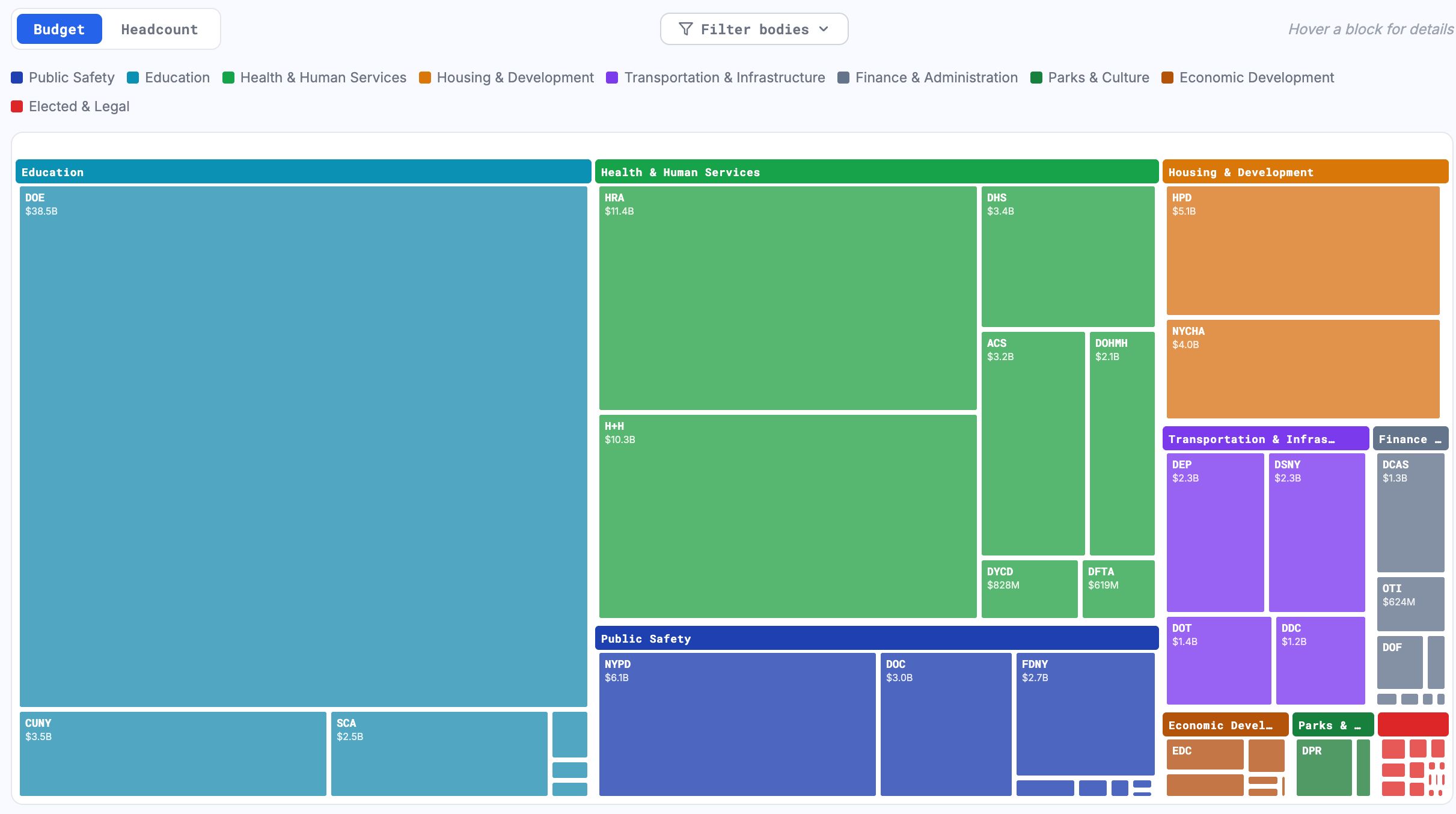
DOE is the single largest agency in NYC, by far, demanding 35% ($38.5 billion in FY2025) of the City budget 24% of City headcount (73,000+ employees in FY2025). Untangling the web of funding sources and formulas is no easy task, but will be necessary as the Mamdani administration grapples with budget gaps.
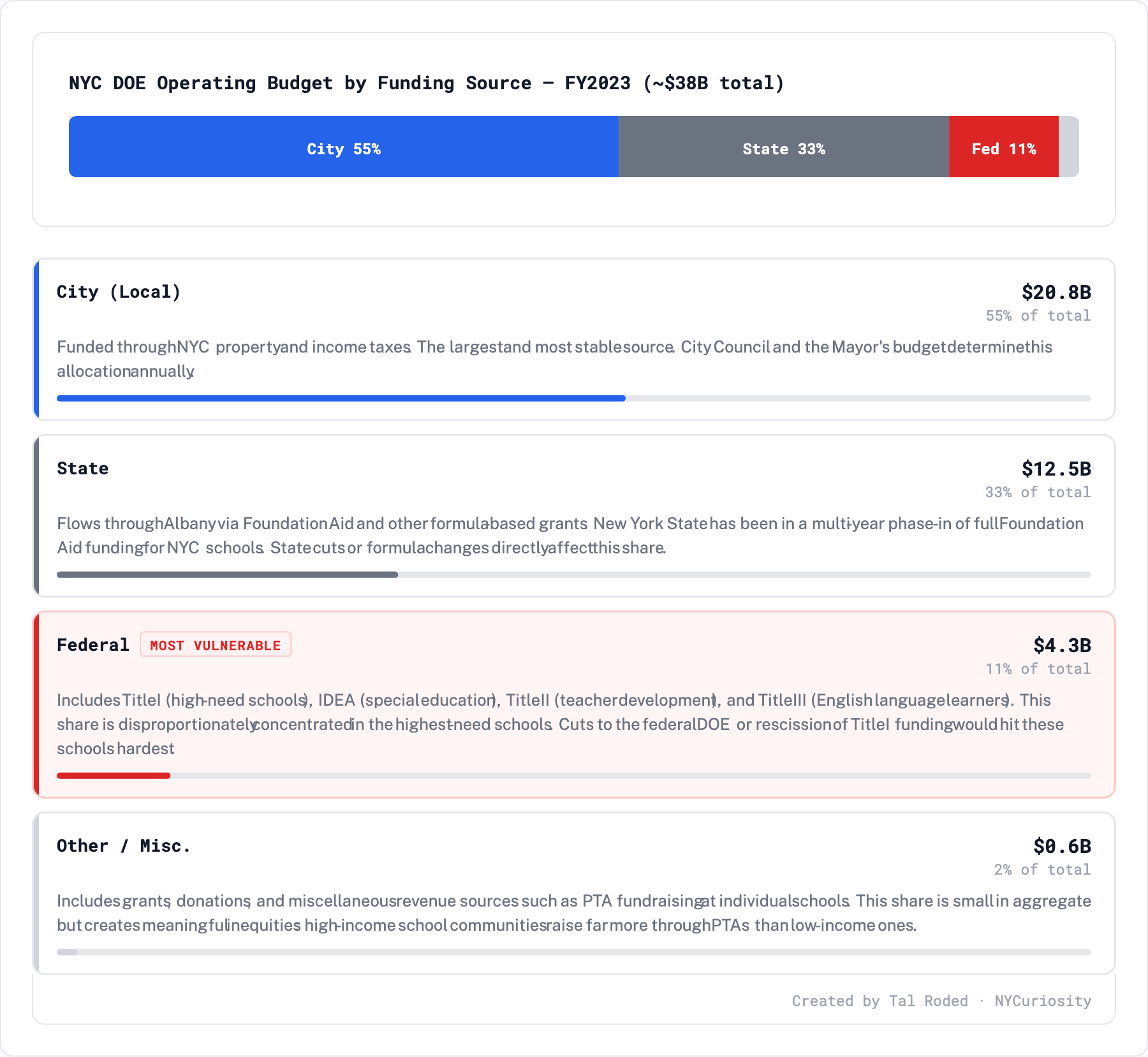
One major piece of news to watch out for is if NYC will delay class size mandates from the State. The mandate is expected to add billions in costs to the City budget over the next few years at a time when expenses are already outpacing revenues. Action here and in other cost-cutting measures on schools, such as combining schools with shrunken student bodies, could save the City billions more but face blowback from parents.
The Mayor has done well at already thinking of new opportunities for collaboration with the new teams he has been forming, such as the Office of Community Safety. We need to keep thinking of new opportunities for agency intersections and collaboration.
Tiffany-Ann Taylor | Chief Strategy Officer, NYC Department of Transportation (DOT)
DOT has over 6,000 employees. It has also historically been lacking diversity at the top. Agencies have often been very siloed in their work, and I would like to form more partnerships. The federal government has also been very focused on NYC, often not in positive ways, and that will be a relationship to navigate carefully. DOT needs to rehabilitate or even create new relationships from scratch with city, state, and federal government partners.
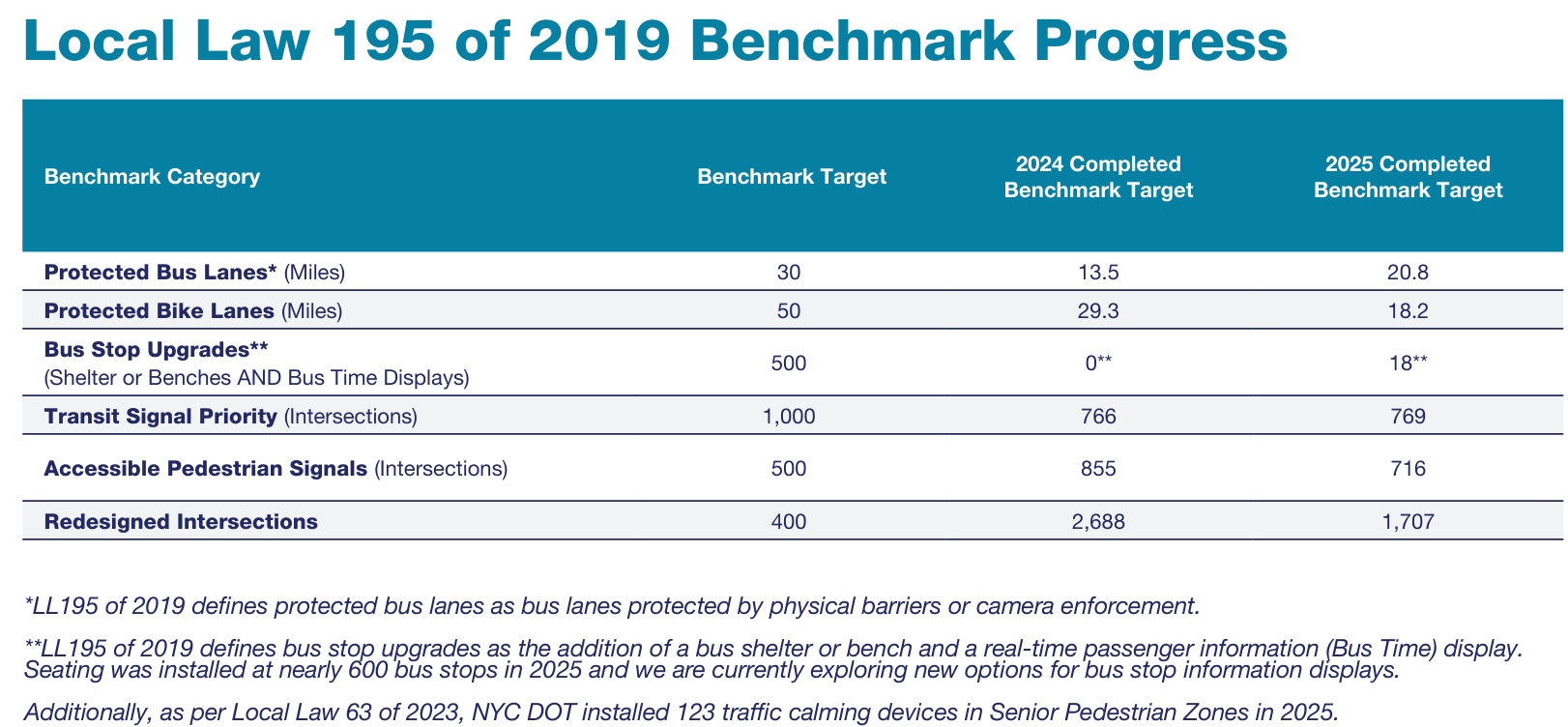
Much of DOT’s goodwill with the NY City Council, street safety advocates, and other groups were burned by its failures to meet Streets Plan mandates during the Adams administration. The agency’s leadership received a thorough thrashing in a recent City Council Transportation Committee hearing, which I covered here:

At the same time, new leadership under Mamdani and promising moves by the previous administration on plans like the Greater Greenways provide much hope. Building relationships with key agency partners and State and federal actors can enable long-awaited hopes and dreams to finally happen under the current energetic leadership.
Her priorities start on month 6 or even year 2, while Day 1 on the job will be focused on resetting relationships, building collaborations. To tackle big ideas like on parking, DOT needs to have better relationships with street advocates and drivers. Drivers fall into different categories, like residential drivers and professional drivers (Uber, Lyft, taxis, trucks, delivery vehicles, etc). With DOT claiming more curb space, many drivers feel they are not being heard or considered by the agency. To tackle parking, a strong relationship needs to be developed with these stakeholders in the roads.
Manhattan Should Charge for Parking

In all of Manhattan, and particularly in NYC’s Congestion Relief Zone (CRZ) which amounts to the area of Lower Manhattan below 60th Street, the city should charge a fee for every single street (curbside) parking spot.
AI needs to be understood for its uses and effects on the DOT and the City. How can it be used by the agency? What is the strategy for its use? What are the implications of others using AI? How can use be efficient and equitable? What are the tradeoffs of all this?
The goal is to make DOT an agency where people are clamoring to work. DOT has been on the defense for the past few administrations, and she wants to make people excited about the agency again and be a leader in change. With the Mayor’s focus on instituting a culture shift in government, changing the culture at DOT is a prime opportunity. A key priority is to improve both internal morale and external excitement about DOT initiatives.
This is such a helpful report! I'm loving all of the data resources you've been building.
What an interesting report! I heard about a Better Billion on a podcast a while back and it’s certainly convincing, although politically difficult.