


New York City reached its 400th year in 20251, with shockingly little fanfare. To the dismay of history nerds and local media outlets, there were few celebrations held by the City. With a self-professed party-loving Mayor, it seems uncharacteristic for NYC not to have done more to commemorate such an impressive milestone.
Perhaps it was the distractions of an unexpected victory in the mayoral primary and subsequent general election, the affordability crisis afflicting many residents, or the endless news coming out of the much younger, down-the-river capital. Certainly, there are a number of more pressing issues to be attended to by City Hall, and New Yorkers are not ones to spend their time waiting around or reminiscing.
But there is value in both remembering the past and celebrating how far the City has come since those early Dutch origins. From humble beginnings as an afterthought colony handed to the British without a shot being fired, Manhattan has become the island at the center of the world.2
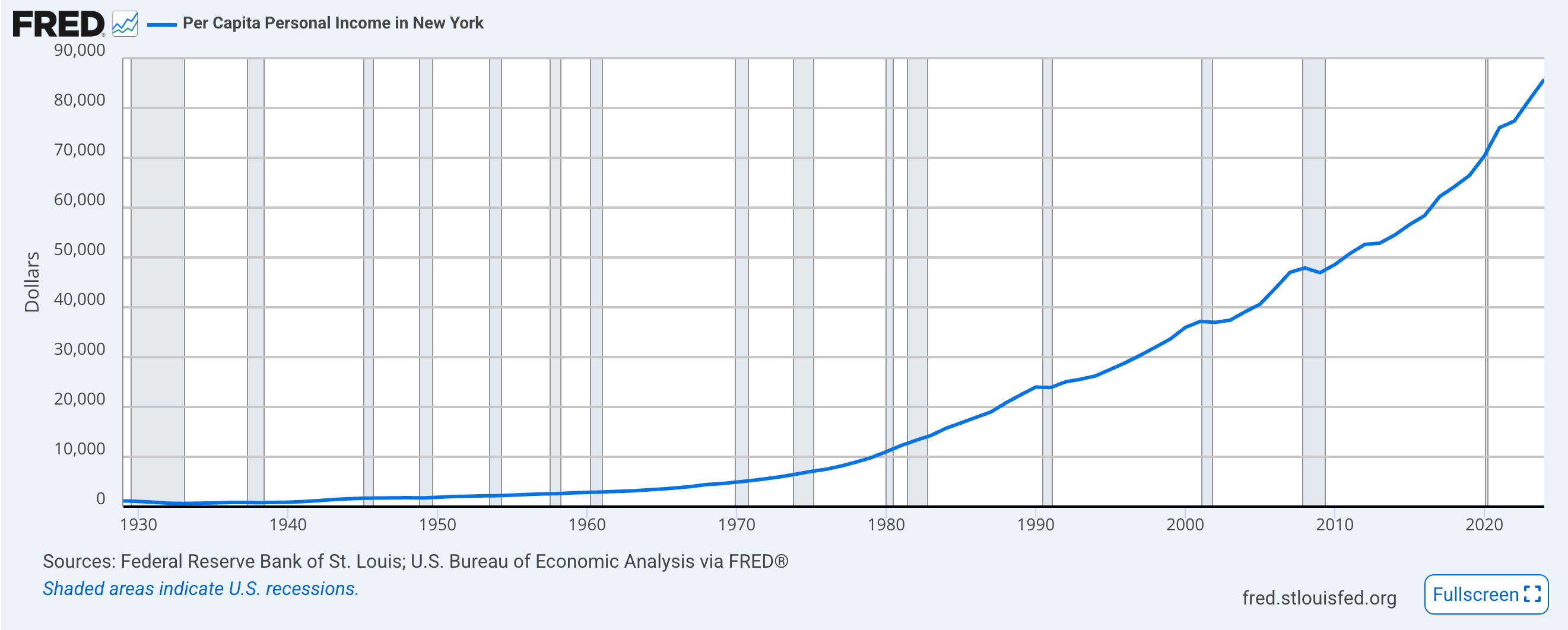
Let’s look at how NYC has changed over the past 400 years:
Of course, most of the above estimates for 1625 are very loose and cannot really be compared to 2025 given the lack of institutional context, among other things. In many measures New York is in a category of its own, and that includes when compared to its past self.
In 1625, New Amsterdam’s entire colonist population could have easily fit inside a single modern NYC apartment building. Today, that same footprint supports a population larger than most U.S. states, a government of hundreds of thousands of civil servants, and a system of taxation and legal code that would have been unintelligible to the city’s founders.
In 2053, NYC will have a chance to make up for its missed celebration, when the City will hit its 400th anniversary of receiving an official charter. While I cannot guess what the Big Apple will look like at that point, I hope that it will be led by a government more interested in commemorating its storied history.
That’s all for 2025. Thank you to all those who regularly read, subscribe, and support this Substack. I appreciate every person who has taken the time to read my writing and embark with me on the journey of navigating NYC’s complex government and evolving urban landscape. I’m greatly looking forward to next year, as we see where a new mayoral administration and unprecedented levels of civic engagement take our City.
Happy holidays, and see you all in 2026!
Or perhaps it reached its 400th anniversary in 2024, with the first permanent Dutch settlement on Governor’s Island happening in 1624. Or perhaps it won’t officially reach 400 until next year, since it was in 1626 when Peter Minuit reportedly purchased the island of Manhattan from the Indigenous Lenape people.
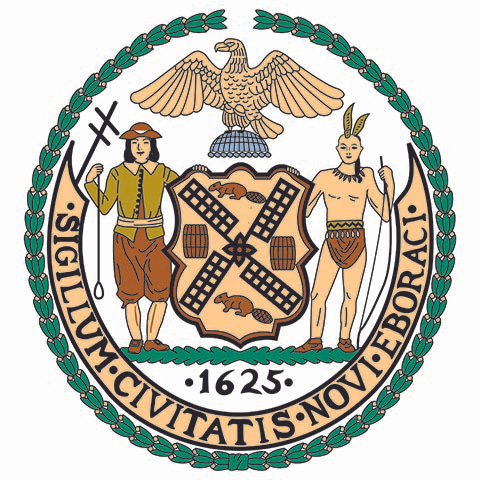
It was in 1625 when Fort Amsterdam, on the southern tip of Manhattan, was established. 1625 is also the year labeled on New York City’s official seal and flag, so it’s the date I’m going with. At the very least, if 1625 is the year officially recognized by the City’s government, it is the year you would expect some official celebrations.
I have to acknowledge here, too, that a major catalyst for NYC’s transformation from typical port town to global metropolis, was the Erie Canal. Opened in 1825, this historically vital waterway held its own 200th anniversary celebrations this past summer.