


Avenue B’s Open Streets program has been so successful that the city is now considering permanently redesigning part of the avenue to become more pedestrian friendly. Residents of the area - and really anyone else who has a desire to - have the opportunity to submit their thoughts to a NYC Department of Transportation (DOT) survey. Submitting feedback to DOT’s survey supporting the proposed changes is a great way to ensure that a portion of Avenue B becomes permanently more pedestrian and cyclist friendly.
Open Streets has been a majorly successful program in temporarily taking back NYC’s streets from their century of car dominance. In this post, I will discuss the success of the Open Streets program overall and provide some arguments for why you should submit feedback to DOT supporting the proposed redesign and requesting even greater change.
Open Streets is a young program already driving livability improvements
Open Streets is a program that began in 2020 in which the NYC DOT partners with local organizations and institutions (schools, churches, block associations) to close roads to cars for a limited time1. The style and duration of the closure can take all manner of shapes and forms2, but generally involves shutting down a street to non-emergency vehicles for a specified range of hours during the day, for certain days of the week, and certain time frames of the year.
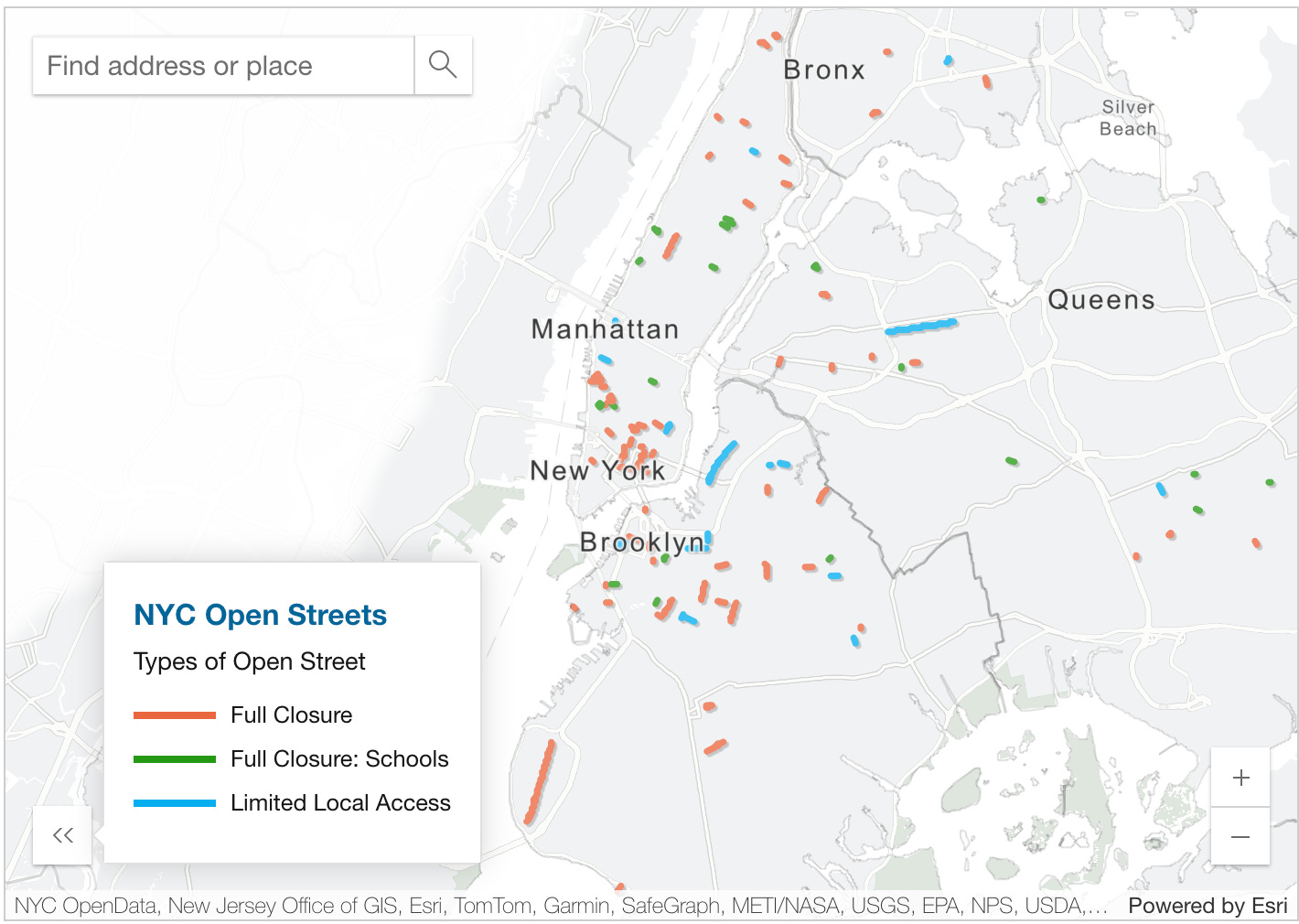
For example, Avenue B’s Open Street program stretches from E 7th St to E 10th St, occurs daily from 8 am to 8 pm, and this year (as in past years) runs in partnership with the Loisaida Open Streets Community Coalition and The Hort from April 26 to December 31st. This program has been popular with residents, with the three-block stretch of Avenue B being highly utilized by pedestrians and cyclists during these stretches as well as numerous events throughout the year.
Open Streets overall has generally received praise and been a beloved change to how we use our streetscapes everywhere it has been implemented. Cyclist injuries on Open Streets were down 17%, motorist injuries were down by 50%, and pedestrian injuries were down 42% compared to the year before Open Streets were first created - all greater drops than the trends citywide. At the same time, a Sienna College poll in 2021 also found that 63% of NYC voters supported Open Streets. The involved streets have expanded each year since the establishment of Open Streets in 2020, when they began informally and temporarily as a result of the COVID-19 pandemic.
In fact, this year for the first time ever, Summer Streets - a different program than Open Streets but the same concept - in Manhattan, occurring on Saturdays from 7 am to 3 pm throughout August, will carve a car-free path from the top to bottom of Manhattan. This is incredible, and the success of the program so far and demand for more Open Streets should give the city reason to both expand the program and consider more permanent redesigns of its streets.
The Avenue B redesign and why you should provide your support
Avenue B is a diverse, dense urban street featuring an amalgamation of public schools, restaurants and bars, community gardens, and homes. According to the 2021 Vision Survey run by DOT, the primary use of Avenue B by residents is by far walking over motorized commuting. Residents have also shown a desire for improved pedestrian access, with 65% of survey respondents wanting the avenue to be permanently redesigned to be more pedestrian friendly.
As a nearby resident myself, I have experienced how packed the streets can get, with a relatively narrow avenue being shared by pedestrians, cyclists, storefronts, signs, sidewalk cafes, and cars. With a lack of public parks in the neighborhood, the streets themselves often serve as the public spaces that residents spend their time in outside the home. In fact, DOT Street User Count data found an average of 5x as many pedestrians trafficking Avenue B than cars at peak hours, and equal numbers of bikes as cars. For such a packed and highly utilized corridor, the neighborhood deserves better prioritization of that limited street space than the current configuration that hands over the vast majority of the space for cars and parking.
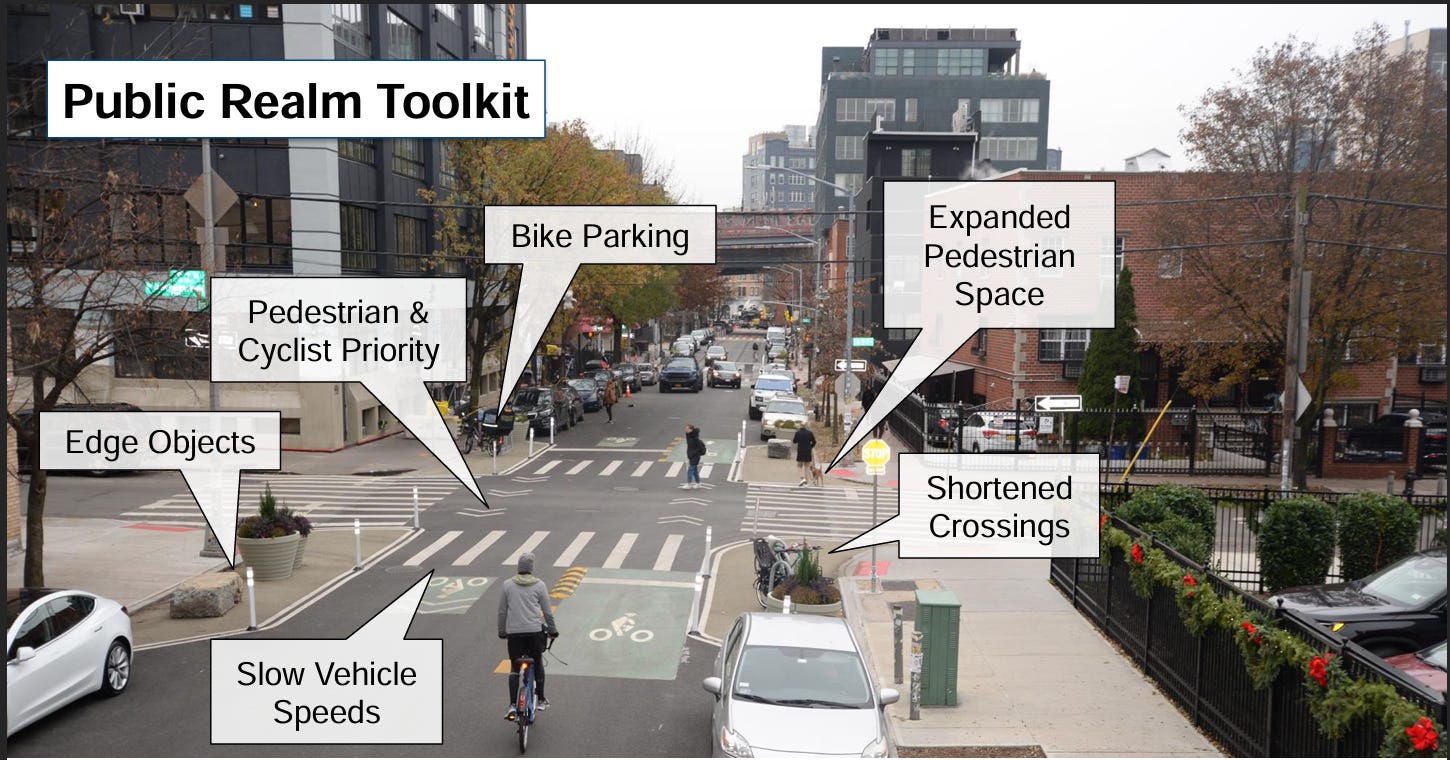
According to the DOT design proposal, the goals of the Avenue B street improvement are to improve safety around schools, improve cycling safety, prioritize cyclists and pedestrians, and perhaps most excitingly, “provide permanent public space and ease operations for larger events”.
This would be achieved primarily through two means:
daylighting the intersections between E 3rd and 13th Streets and shortening the pedestrian crosswalks
Converting the avenue from E 7th to E 10th Streets to a one-way road, which will allow for the establishment of a dedicated two-way bike lane on the street and the expansion of public seating between E 8th and 9th Streets
I highly encourage readers to submit survey feedback and attend future public hearings (such as Community Board 3’s Full Board meeting on July 22nd at 6:30 pm at P.S. 20) encouraging DOT to make the new street design target a larger area and to be as pedestrian friendly as possible. The current proposal is great, full of common-sense changes and easy wins that can be implemented this year.
But DOT can and should be more ambitious. For one, a significant amount of parking space along Tompkins Square park is still being preserved, and the avenue outside of the park section and a handful of intersections remain untouched by this plan. The actual redesign is quite limited in scope, targeting only a corridor of about four streets. The success of the Avenue B Open Streets program and the car-free redesign of Broadway shows that New Yorkers have an appetite for more than just improved intersections.
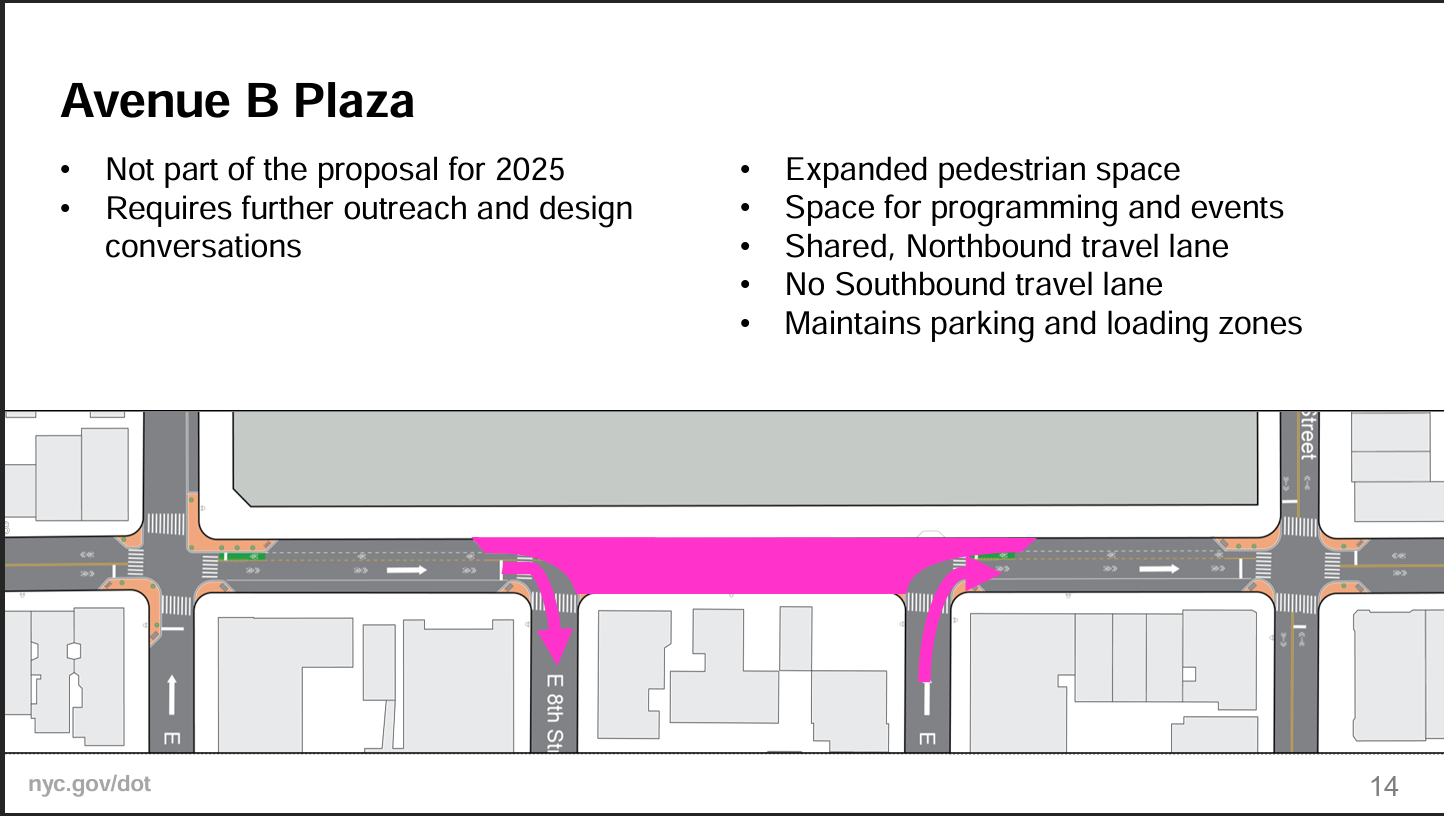
Telling DOT your desire to have even more public space could encourage the agency to adopt grander ideas like turning Avenue B into a full pedestrian plaza. Other talking points you can mention, as provided by Open Plans:
Add more daylighting throughout Avenue B — especially from 4th to 12th Street
Include more loading zones on every block to reduce double-parking and improve safety
Extend sidewalks at East 11th and East 13th Streets to match other intersections and support heavy pedestrian traffic
Continue outreach and expeditiously implement a plaza block next to Tompkins Square park in follow-up to this project.
Study and pursue implementing a Low Traffic Neighborhood pilot to reduce cut through traffic throughout the whole neighborhood.
In addition to these points, I’d like to see more dedicated bike lanes along all of Avenue B, rather than the current set-up along many streets where bikes and cars share the road. Removing street parking would provide ample space for these new lanes, as would the conversion of all of Avenue B into a one-way road. This could also allow for the further expansion of public spaces, such as roadside parks, seating, and sidewalk cafes.
Open Streets has been a wildly successful program and has proven that when you prioritize pedestrians over cars, the streets come alive. DOT proposals should reflect the desires of city residents, and at the same time, New Yorkers should demand more from their urban spaces. When the two work in harmony, we get results like Broadway’s permanent car-free redevelopment and livelier, safer streets.
DOT relies on the local organizations and institutions to run the actual Open Streets programming. While the manpower involved in running the program often uses volunteers, there are costs involved with setting up signage, managing street vendors/booths, and maintaining safety. Prospect Park Heights wrote an insightful breakdown of their Open Streets costs here.
One common type of Open Streets program is “Full Closure: Schools”, in which the blocks around a school are temporarily shut off to cars during the school day “for drop-off and pick-up operations, recess, and outdoor learning.”