


Last Saturday, I embarked on a Gilded Age tour of Lower Manhattan with Keith Taillon of @keithyorkcity. Keith is a New York City historian and author of the excellent book “Walking New York: Manhattan History on Foot”, a must-read for anyone interested in NYC history and architecture. What I particularly enjoy about Keith’s writing and tours is that he masterfully blends the architecture and infrastructure of NYC today with connections to its past, and clearly draws the connection between urban planning decisions and economic trends.
Walking the streets from Washington Square to Madison Square with him on Saturday morning, the influence of New York’s 19th-century ruling class - and the industries that continuously pushed them uptown - is clear on every building and pathway. While much of the City’s architecture from this era has been torn down or remodeled, remnants are abundant for those who know where to look. Facts that we take for granted, such as the direction of Broadway or the private park in the middle of Manhattan, are often the result of individual decisions made two centuries ago. Understanding how and why such decisions were made gives us a better understanding of the NYC that we have today, and how we can act to continue building and improving the City for tomorrow’s residents.
Below, I share some of my key takeaways and broader lessons from Keith’s Gilded Age tour. This is just a high-level overview and leaves out much of the rich detail that gives life to the historical lessons listed below. To truly know the City and how it came to its present form, I highly recommend booking one of Keith’s tours, or at least purchasing his book.
Notes from the tour
New York’s colonial Dutch origin and character influenced much of the US’ founding principles when NYC was the U.S. capital post-American Revolution; Dutch political ideology is present in the U.S. Constitution and early federal government structure.
New York neighborhoods often followed a cycle of being occupied by the rich, who then move uptown as businesses and industry moved in, leading to property values falling, leading to poorer residents moving in, letting artists and bohemians move in to the now affordable neighborhood, leading to the neighborhood becoming fashionable again, leading to rich people moving back in and driving prices back up, and the cycle repeats.
You can see waves of new luxury buildings pop up every cycle that dot the fashionable neighborhoods - look at the years that different high-rise luxury buildings were built to pinpoint new waves of upper-class residents.
This cycle was more pronounced in the West Village area because the streets here were older and famously not in a grid system. On the east side, industries and businesses could move in sooner and establish neighborhoods as industrial, skipping the rich residences stage of the cycle.
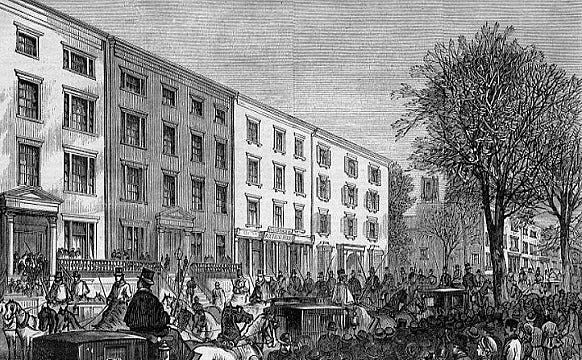
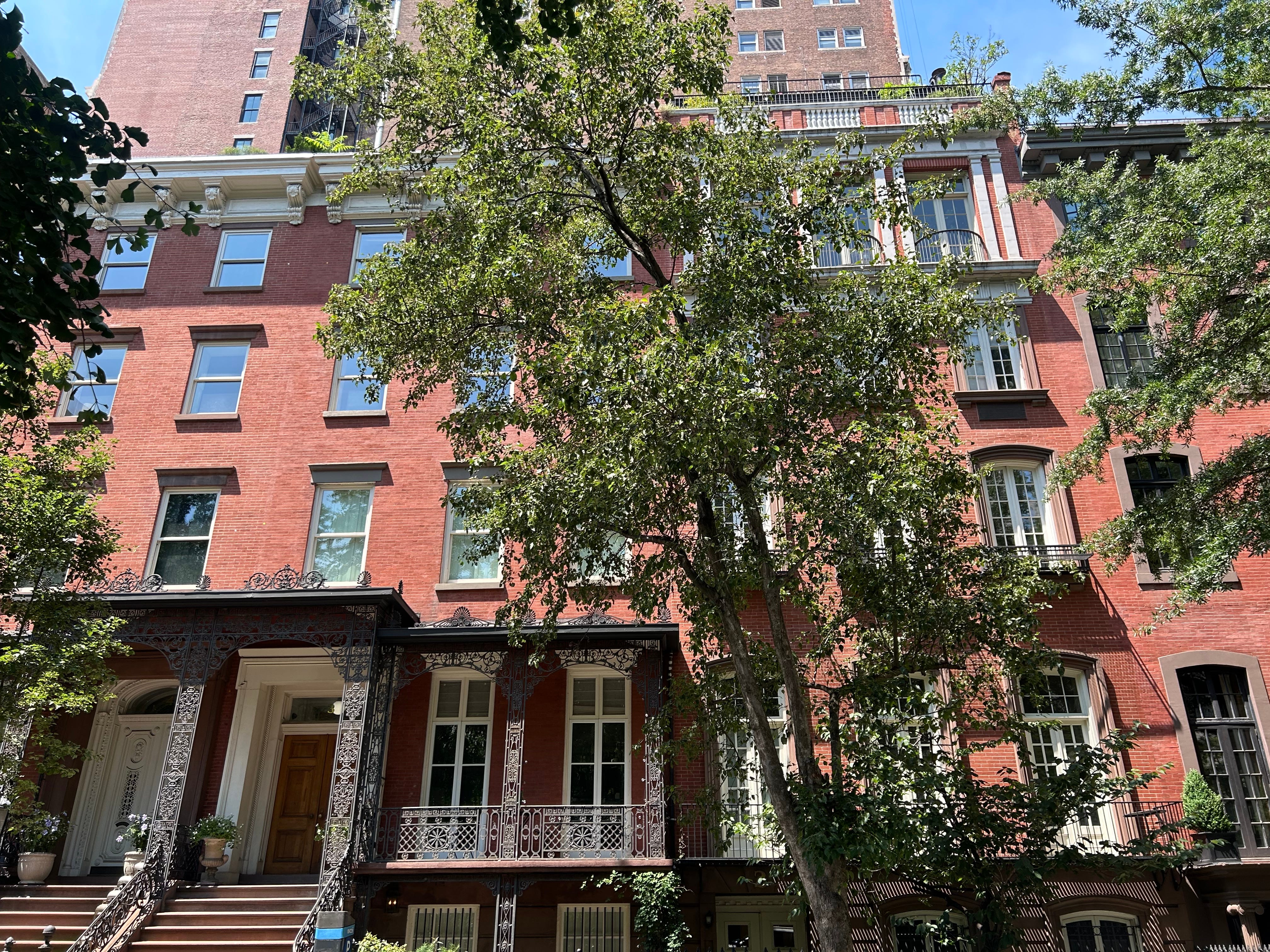
Upper class, yet plain-looking - typical of the pre-Civil War era. [source] Dutch culture, and thus NYC culture, up until the Civil War was focused on making money and also not flaunting the money you made. This made NYC a city that accepted all people as long as they worked hard, and encouraged a culture of hustling. It also meant that their homes tended to be very plain-looking by later standards. Flaunting wealth and building ostentatious homes would be characteristic of the Gilded Age and began post-Civil War.
Note how quickly neighborhoods could change. It was only 50 years from the Vanderbilts’ residence in Washington Place to the Triangle Shirtwaist Factory fire (in which the neighborhood had already switched from rich people’s mansions to factories).
The switch to building more embellished buildings began after the opening of the Erie Canal. Prior to this, flashy homes more often made people social pariahs. But only after the Civil War did upper-class Americans shift to more trans-Atlantic tastes, and have such wealth that they could buy their way into the upper classes.
After the Civil War, there was a big question of who we were as a country and what our national character would be. This is when the new money families rose and changed the culture from the Dutch ethos of modesty and hard work to one of ornate homes and showing off wealth. Some people thought this was a loss of our founding American principles.
Cornelius Vanderbilt first built his wealth on shipping between the islands of NYC, while John Jacob Astor first made his wealth first in the fur trade.
Astor Place
You can see the immense importance of the beaver for early New York in how the beaver is on the state flag. Astor Place Station also has beaver markings referencing Astor’s original trade that first built up his wealth.
In the early 1800s, Astor pivoted from the fur trade to real estate and bought huge tracts of land throughout Manhattan, which is what grew his wealth to truly massive proportions.
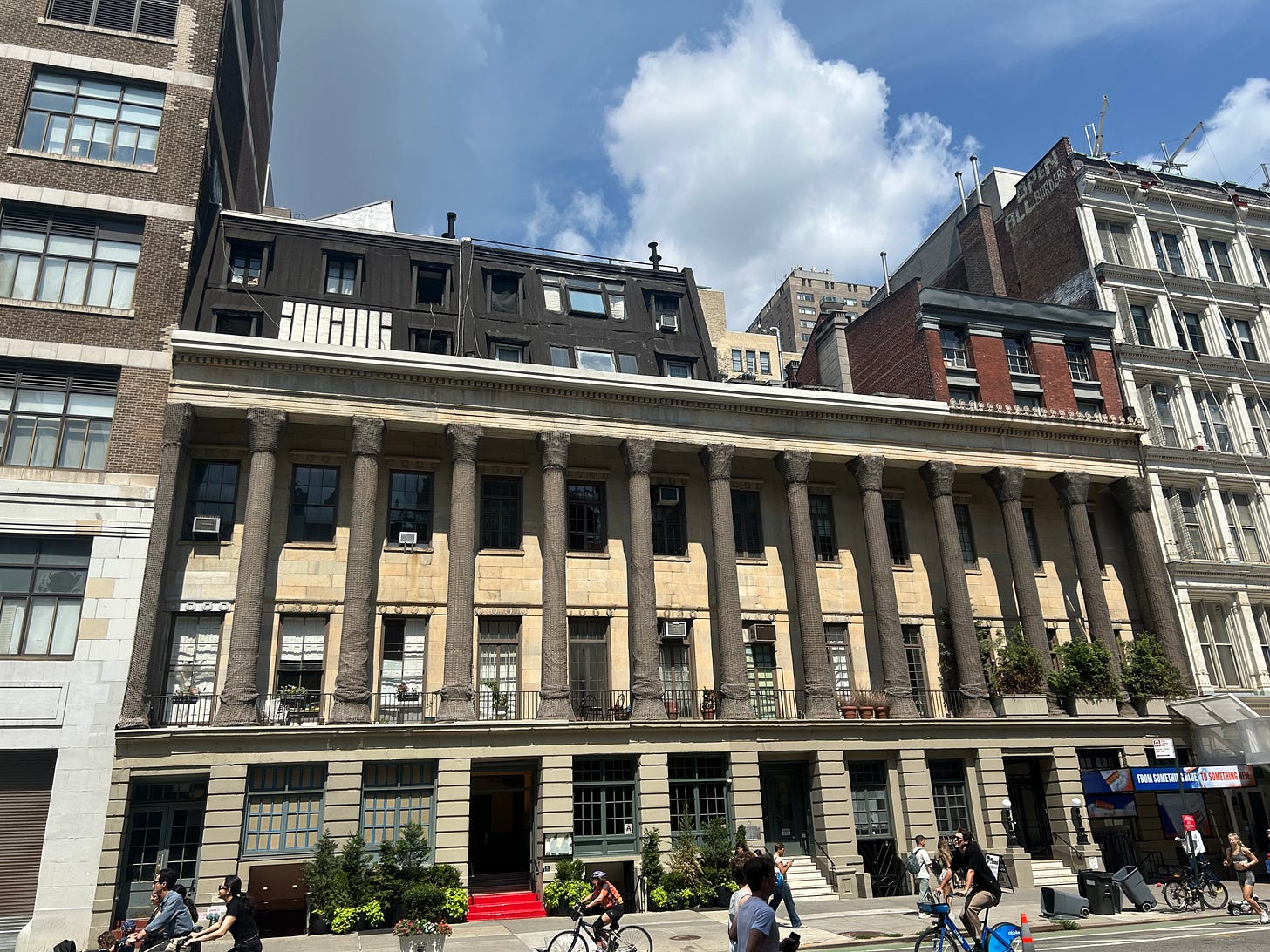
Only remaining English houses that John Jacob Astor built in 1830s. Note the crumbling columns wrapped to prevent any accidents (no hunter green scaffolding!).
The Astor family was originally socially shunned by the NYC inner circle of elites. In fact, John Jacob Astor was very disliked personally and had many “low-class” habits like chewing tobacco. Only the creation of the grand neighborhood on Lafayette Place that finally attracted elite families to move in allowed younger generations of Astors to marry into those elite families.
Caroline Schermerhorn Astor married into the Astor family and then became the purveyor of who was considered upper class and part of society, with some irony. She set down the rules and is claimed to have said that you must have three generations between yourself and the origins of your wealth to be considered Old Money.
Story of the 1849 Astor Place riot and Irish working class anger in response to the English actor William Macready performing Macbeth at the Astor Place Opera House showcases both class tensions at the time and how quickly neighborhoods could transform. After the riots, the upper class of the Astor Place neighborhood escaped to new homes uptown.
Before zoning laws, if anyone on your street sold their home to a developer, it could be torn down and replaced with a factory or tenement, and that would begin the decline of that street from rich residences to industry or poor residences.
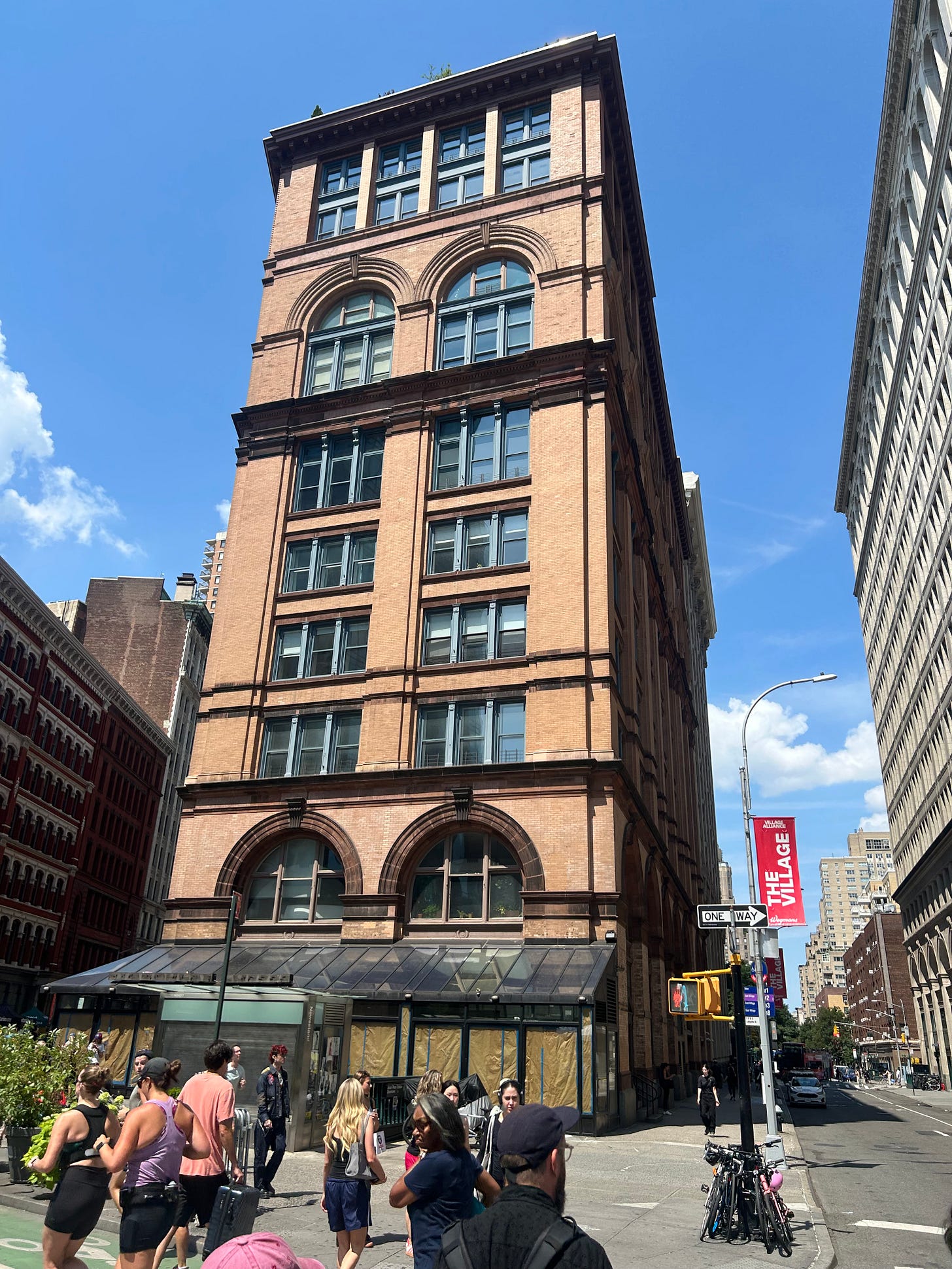
Original site of the Astor Opera House. First floor is now home to nothing as the Starbucks long situated there recently shut down.
The New York Public Library system was born out of the Astor Library, which was combined with the Lenox Library and a large donation of money and books from Samuel J. Tilden to create New York’s first public library.
Grace Church & Broadway
Grace Church on Broadway was completed in 1846 and was one of the tallest buildings in the city when it was completed. Churches had to move uptown to follow their congregants as they moved uptown.
The first bend in Broadway occurs around E 11th St, where an 80-year-old American Revolutionary War veteran owned a plot of land which Broadway would have had to bisect. Out of respect for the veteran, Henry Bravoort, they changed the direction of Broadway in order not to cut up his land. Standing at Grace Church, you can see the NY Harbor and Staten Island hills on a clear day.
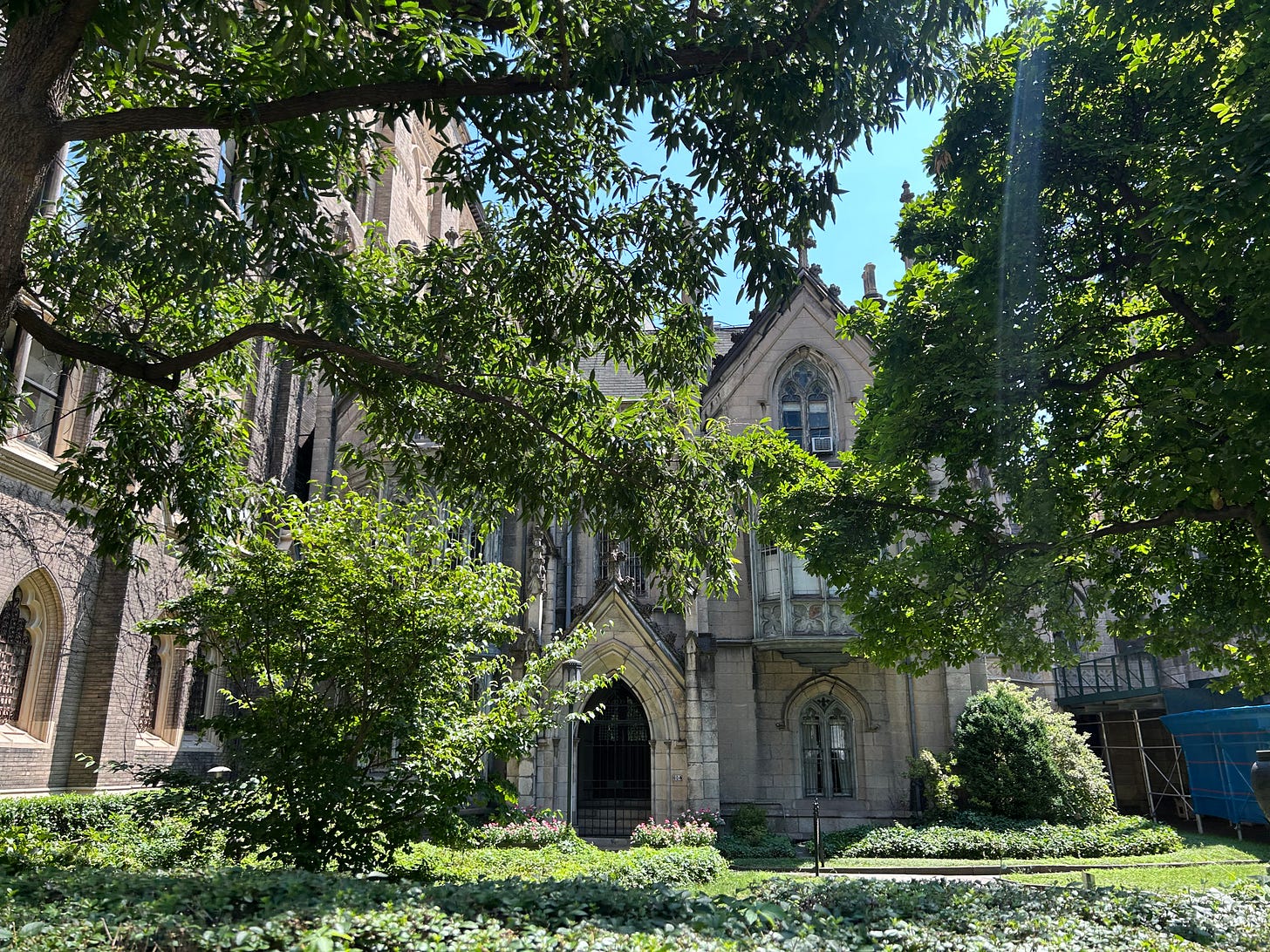
Grace Church in all its Victorian Gothic glory.
Broadway was among the most valuable land in early New York, the Fifth Ave before Fifth Ave. Eventually, again because of the lack of zoning laws, Broadway began to lose its luster as less high-class businesses and industries opened on Broadway itself. Upper-class residents then moved to adjacent avenues that had access to Broadway, but were much quieter.
The key theme is how explosive New York’s growth was post-Erie Canal construction and how rapidly the city’s streets transformed. Streets went from looking pastoral and having several large houses in total to being packed with rows of tenements, businesses, industries, and people in just several decades.
It is likely only due to the 1916 and 1961 zoning laws that we have NYC in the shape it is in today - they effectively froze the City as it was at that time.
Gramercy Park
Samuel Ruggles noticed how Manhattan neighborhoods were rising and falling very quickly, and wanted to establish a neighborhood on his farm, Gramercy, that would last and stay high-class. He watched the development of Washington Square and observed what worked and what didn’t.
He noticed that one beloved element was Washington Park, which acted as an anchor for the neighborhood.
The difference was that he kept Gramercy Park private, and only the 60 residences facing the park would get access (and also be held financially responsible) for the park. That rule has remained in place and has kept this neighborhood protected from the development that now characterizes nearby Union Square.
Gramercy Park is an exception to the rule of cyclical and rapid neighborhood change in Manhattan, and has remained extraordinarily intact and retained its Gilded Age character. The quiet, underdeveloped character of the neighborhood attracted many prominent residents - including Samuel J. Tilden, Edwin Booth, Stuyvesant Fish and Mrs. Fish, and Stanford White.
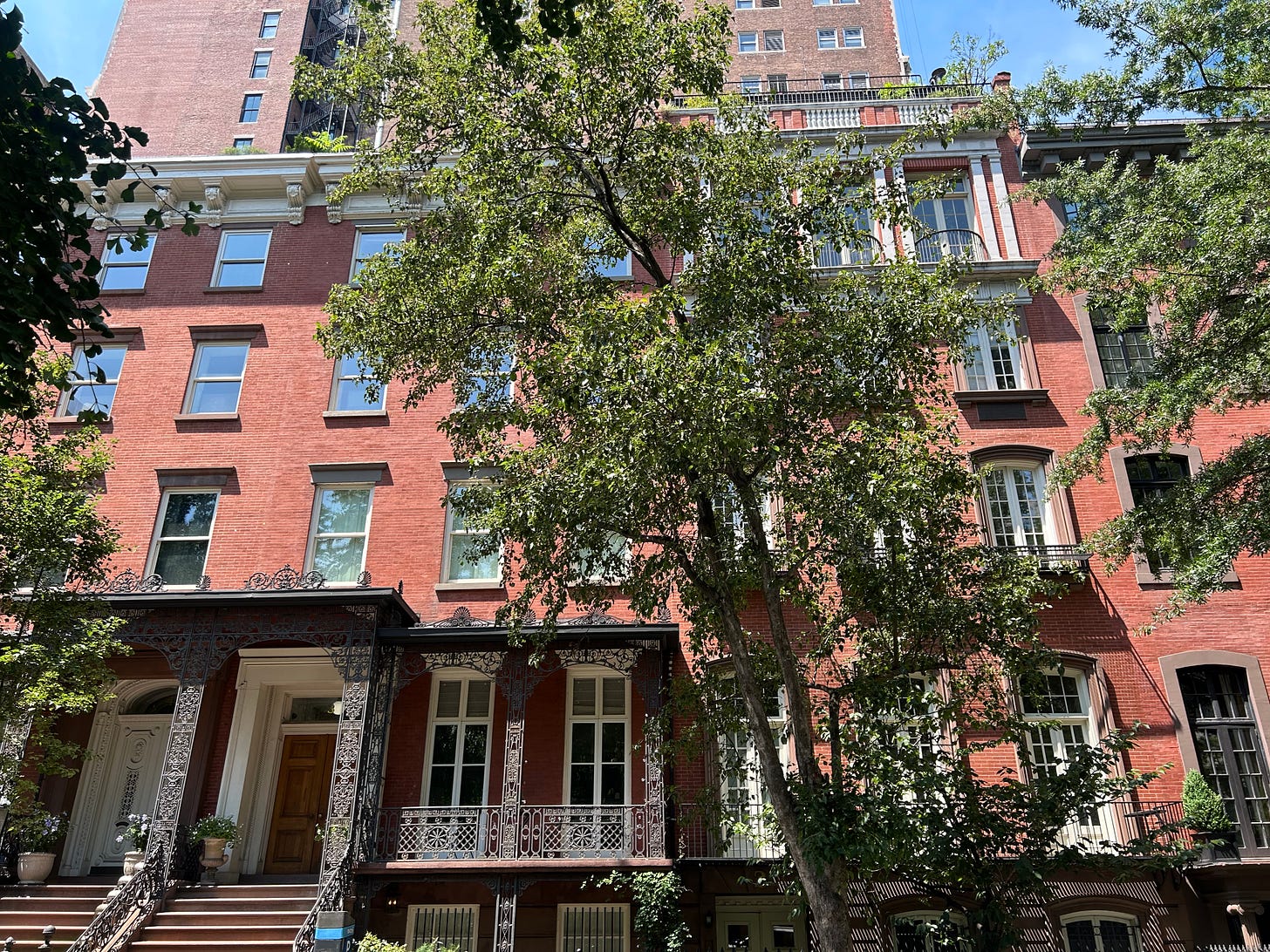
These houses represent the architectural style of the wealthy prior to the Gilded Age.
Manhattan has way more cross streets than avenues because river traffic was considered more important at the time. Needed many streets to cross from river to river, but not as important to travel north to south.
The rapid industrialization of the Civil War era, when many families became rich not by inheritance but by their work and the establishment of new businesses, would bring about the transition to building extravagant homes. Because these “new rich” had created their own success, they saw it as their right to show off the results of their hard work. It was shocking for American high society to watch industrialists build their version of European chateaus and London style of residence, so soon after the American and French Revolutions.
Madison Square
Madison Square Park was laid out in the 1840s, named after former President James Madison, who died in 1836. It was originally planned to be much larger, but the city didn’t buy up the land before it was developed.
This stretch of Broadway by the park was the first to be lit by electric light, giving it the nickname “the great white way”.
Train tracks ending on 4th Ave on the east side of the park made it so living east of here was undesirable. The streets east of here became industrialized and left behind by richer residents.
Old money/high society (such as the Astors) settled in the Murray Hill area post Civil War, while the Vanderbilts and other new money industrialists settled north of Madison Square, where there was open land to build their mansions.
Eventually, even Mrs. Astor bowed to social change and moved further uptown and built an ostentatious mansion (built by none other than Richard Morris Hunt). This began the movement of old money further uptown to where the new money mansions resided.
This emptied Murray Hill of rich residents. Mrs. Astor would build the Astoria Hotel on her old home, which would eventually become the Waldorf Astoria Hotel.
This brought commercial businesses up to 42nd St and the southern border of the Vanderbilts and other industrialists’ residences.
The World Wars, the imposition of income and inheritance taxes, the Great Depression, the decline of the great families, and several other factors would bring an end to the Gilded Age. The rich families switched to living in luxury hotels or escaping to the suburbs instead of mansions in the City, and their homes were torn down and replaced by skyscrapers.
Inheritance tax was implemented in WW1 when the breakdown of transatlantic trade, in which tariffs and duties brought in the primary amount of government revenue, forced the government to look toward new sources of revenue.
Wow. Awesome post - did not know that RE: Grammrrcy park and why there are more streets than avenues.
You should check out the Morgan Library if you want more Gilded Age content!
So interesting about Gramercy Park. I wonder what the geography of the city would look like today had New York continued to create a dispersed network of neighborhood squares rather than combining all into one massive Central Park? Would we have a less economically segregated city with pockets of wealth around important parks being separated by more middle and working-class blocks?