


Deep in the heart of Queens, surrounded by the neighborhoods of Woodhaven, Ozone Park, and Rockaway Beach, containing over 250,000 residents, are the abandoned train tracks formerly known as the Rockaway Beach Branch (RBB). This 3.5-mile corridor has been at the center of competing proposals for what to do with the tracks, entirely abandoned since 1962.
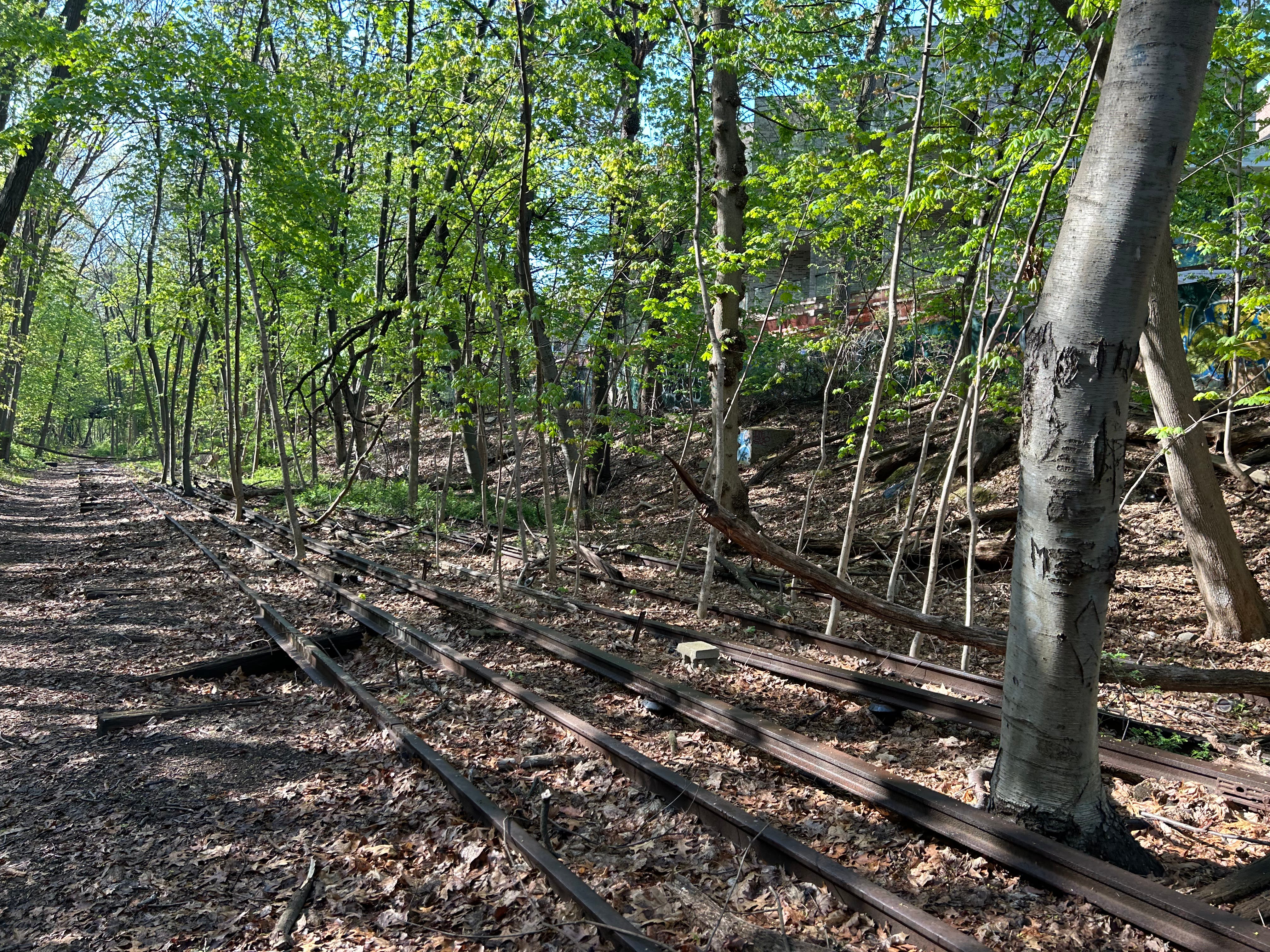
On one side is QueensWay, an organization calling for the corridor to be converted into a Highline-style park with plenty of green space, bike and pedestrian paths, and 47 acres of parks for the surrounding neighborhoods to enjoy in the next few years.
On the other side is QueensLink, who agree with creating park space out of the corridor, but also see the opportunity to reactivate the train tracks. They put forward a proposal to extend the M train from its current terminus at Forest Hills - 71 Av and instead continue onto this abandoned right-of-way (ROW) onward to Rockaway Beach, a project that would likely take around a decade to complete.
QueensLink advocates believe both a park and improved transit access can be provisioned, boosting connectivity for these outer Queens neighborhoods to Manhattan. They also believe the longer timeline is worth it for the massive transit benefits for the region. QueensWay advocates don’t see this proposal as realistic given the current state of the corridor and the tremendous cost and time required to reactivate the tracks, and prefer to move forward with a model park corridor that can be implemented more quickly.
To be honest with you, dear readers, I was someone who strongly leaned towards supporting the QueensLink proposal. The opportunity to bring new rapid transit to these Queens neighborhoods while still providing park space seemed too good to pass up. I’ve also often argued that NYC needs more ambitious urban transportation project proposals, and QueensLink fits that bill.

However, to my surprise, I was recently reached out to by QueensWay advocates to walk the project area and learn about their goals and objectives.1 Our conversation surfaced more complex dynamics than what you typically read online about this issue, which has motivated me to write an article digging deeper into the issues on either side of the RBB debate.


This is not to say that I am now all aboard the QueensWay perspective. I still have hopes that elements of both proposals can be implemented to some extent – Queens needs both more transit and more parks. But walking the RBB corridor myself and talking to advocates on the QueensWay side, outside my usual bubble of transit nerds, has raised difficult questions that make the choice between the options less clear cut than I thought. Regardless, it’s healthy to look at both sides of an issue, and I think that the discourse online in the pro-transit community has perhaps been too mistrustful of the QueensWay project without considering the merits of their case.
So, with the stage now set, let’s talk about why I believe that the QueensWay proposal deserves more serious consideration from the transit community, and why the choice for this corridor is genuinely difficult to decide.
Why the Feasibility Case for QueensWay Is Strong
The arguments for QueensWay versus QueensLink start and end with feasibility. On the merits, QueensLink certainly appears to be the superior proposal: it provides nearly as much new park space and greenways as QueensWay’s park proposal would, but with the added benefit of rapid transit and subway connections. QueensLink’s proposal claims that you can have your cake (new park space), and eat it too (new transit).
But there have been indications that extending the M train through this corridor is not feasible, at least not in the near future nor at the price the QueensLink team claims. While reactivating the abandoned RBB tracks is great in theory, the MTA itself has thrown some water on the idea.
In 2018, the MTA took a look at the Rockaway Beach Branch tracks and estimated costs for restoring services to this branch. The findings were quite different between those of QueensLink. Across the board, the MTA was less optimistic on potential ridership and project costs. The report examined reactivating the tracks for both LIRR and NYC Transit subway usage – in both cases, costs were estimated at double or more what QueensLink estimated.
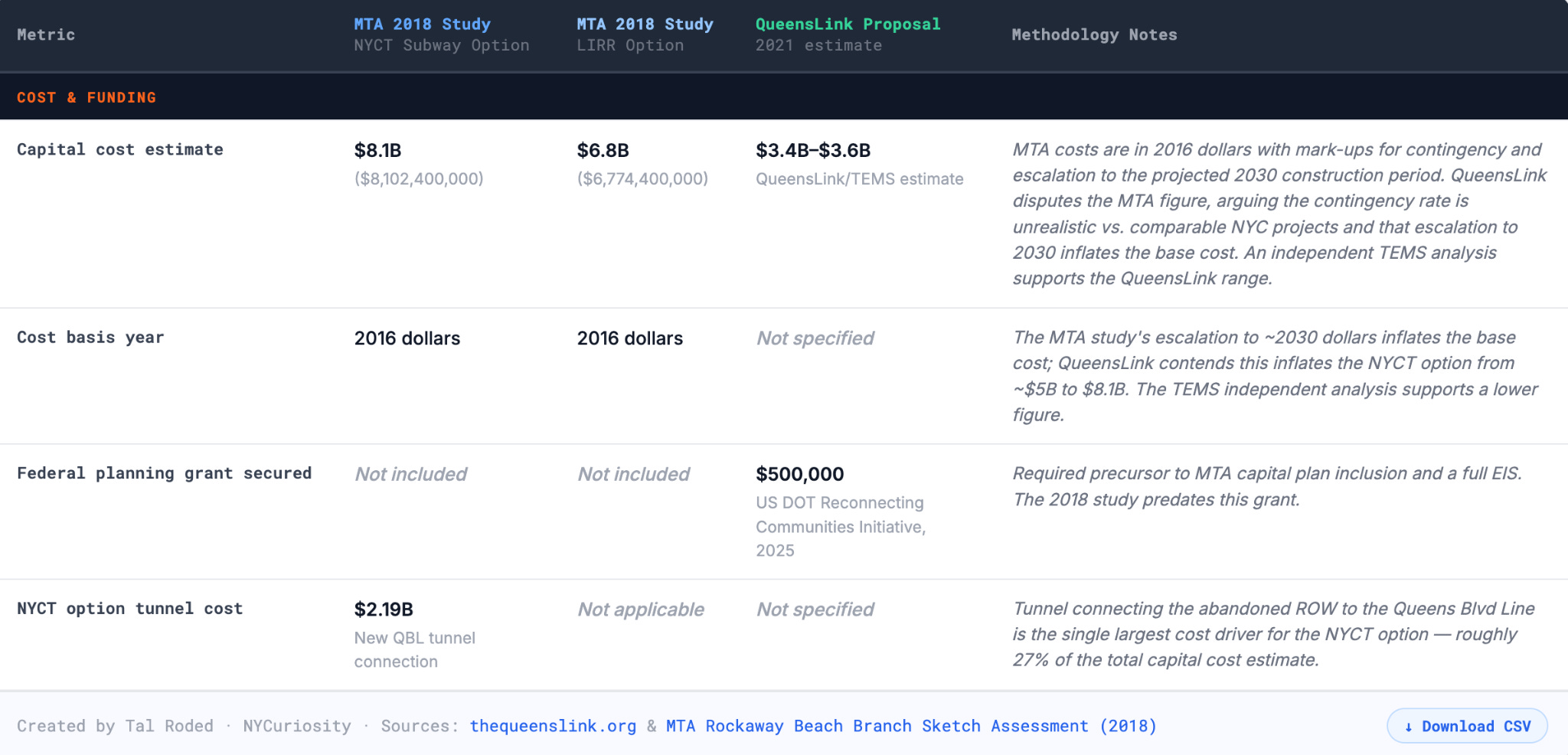
The MTA projected fewer daily riders and less frequent service along this corridor, estimating around 47,000 daily riders by 2025 compared to QueensLink’s 75,000 estimate. Even the QueensLink estimate would be less than half the ridership estimates of other current or proposed transit projects elsewhere in NYC: the IBX (estimated cost $5.5 billion) projects 160,000 daily riders and the Second Avenue Subway Phase 2 extension (estimated cost $7.7 billion) projects 200,000 daily riders. This lower ridership projection greatly brings up the cost per rider metric key to a transit project’s feasibility.
Part of the reason for these differences is the MTA proposing both the M and R trains to run on the lines, lower service frequency, and other operational differences that would affect ridership. Other differences stem from study methodology, with the QueensLink people protesting that the MTA incorrectly inflated costs in its report.
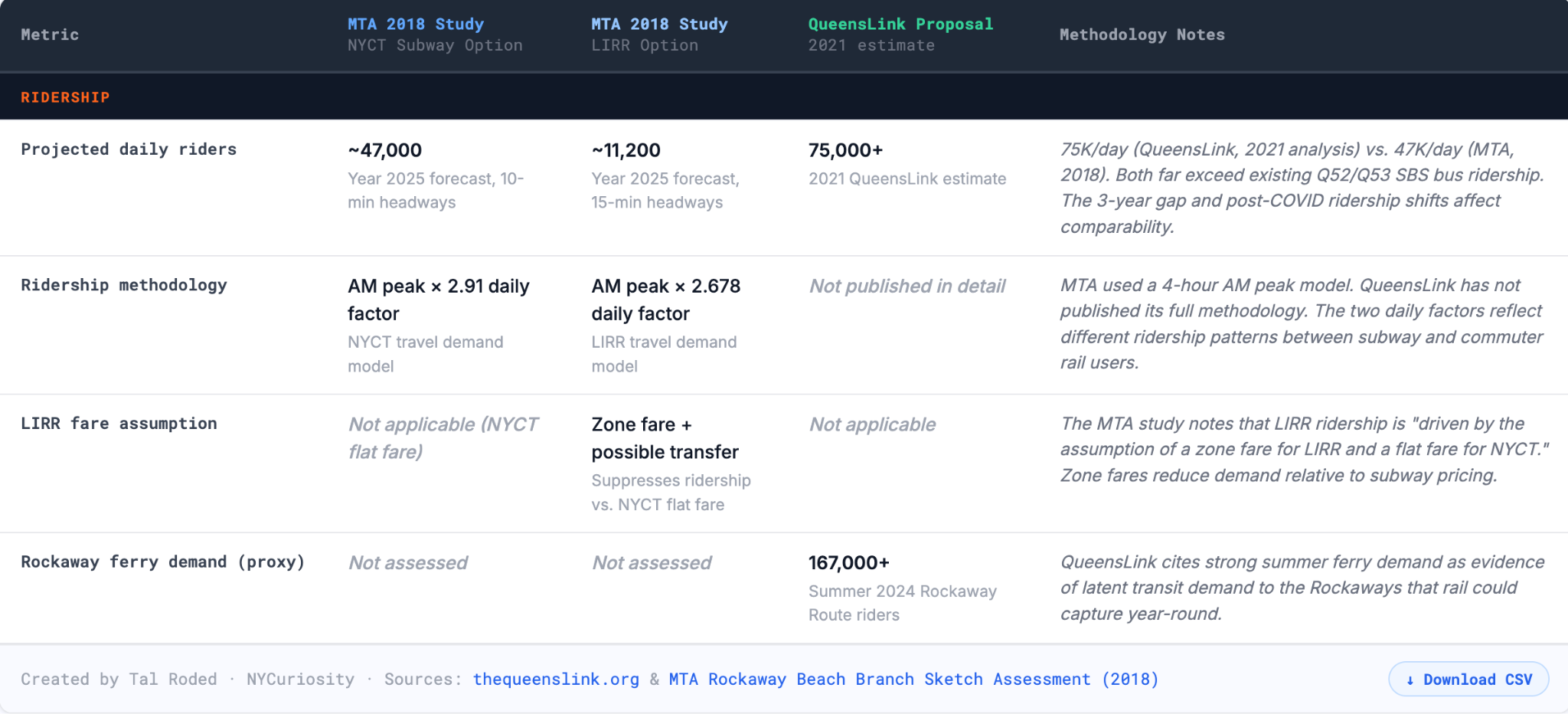
Which estimates you believe largely affect the project’s overall feasibility and whether it makes sense to pursue. Even accepting the argument that the MTA report may contain errors leading to overestimated costs, it remains clear that expectations within the agency clearly don’t align with those of QueensLink.
In the MTA’s more recent scorecard of the Rockaway Beach Branch reactivation in its 20-Year Needs Assessment, the project received low scores on all categories besides equity (admittedly, a very important consideration, and more on that soon) and overall low potential compared to the other projects in the MTA’s portfolio. The total cost was now projected at a lower $5.9 billion, still nearly double QueensLink’s estimate and hurting the cost per time saved metric.
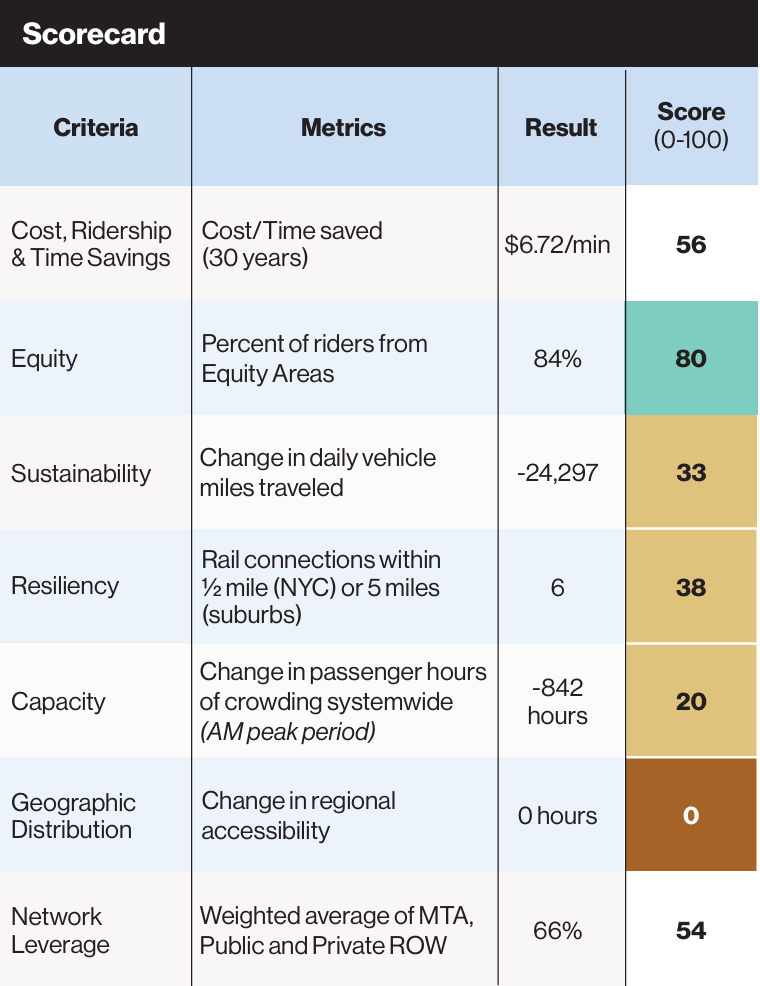
Part of this low score ties back to continued disagreements about true ridership and costs. However, the MTA’s doubts extend to impacts and benefits of extending service in other manners as well. The findings section attributes low scores to the fact that “There is minimal crowding reduction since some Queens Blvd Line subway service would be moved to serve this new line, and there is no improvement in geographic distribution.” Further, the 2018 MTA report claimed, “Overall, the middle class established neighborhoods prevalent along the RBB do not lend themselves well to [Transit-Oriented Development] potential.”
What QueensLink Gets Right
I don’t want to completely disregard the QueensLink proposal based on these cost and ridership estimate differences, however. For one, consider some important facts about the corridor surrounding the Rockaway Beach Branch in Queens:
There are over 250,000 residents within a 15-minute walk of this area
The average commute for some neighboring areas, such as Howard Beach and South Ozone Park, are north of 45 minutes – among the longest in NYC
20% of these residents commute over 60 minutes each way, far above the City average of 37 minutes
The neighboring communities are amongst the most diverse in the world, not just NYC, housing communities from South Asia, the Caribbean, and Latin America
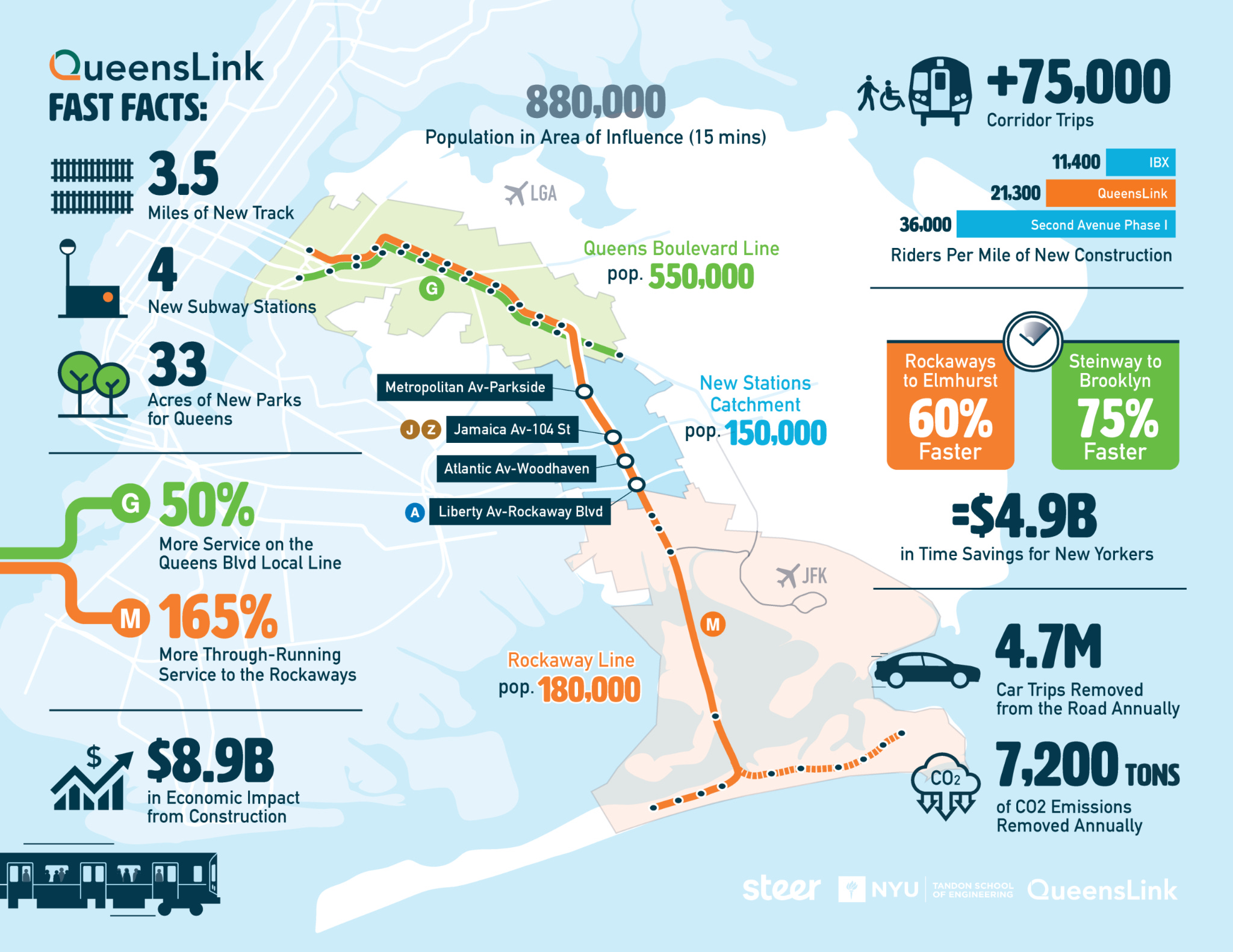
Currently, the primary method of public transit in the area are the Q52/Q53 buses, which run along Woodhaven Blvd. This bus route is subject to slow, surface-level traffic on a heavily congested street with limited bus-only provisions. At the same time, around 30% of residents drive to work, reflecting a higher car-dependency than usual for NYC. Clearly, this is a region of the City that would benefit from improved public transit access.
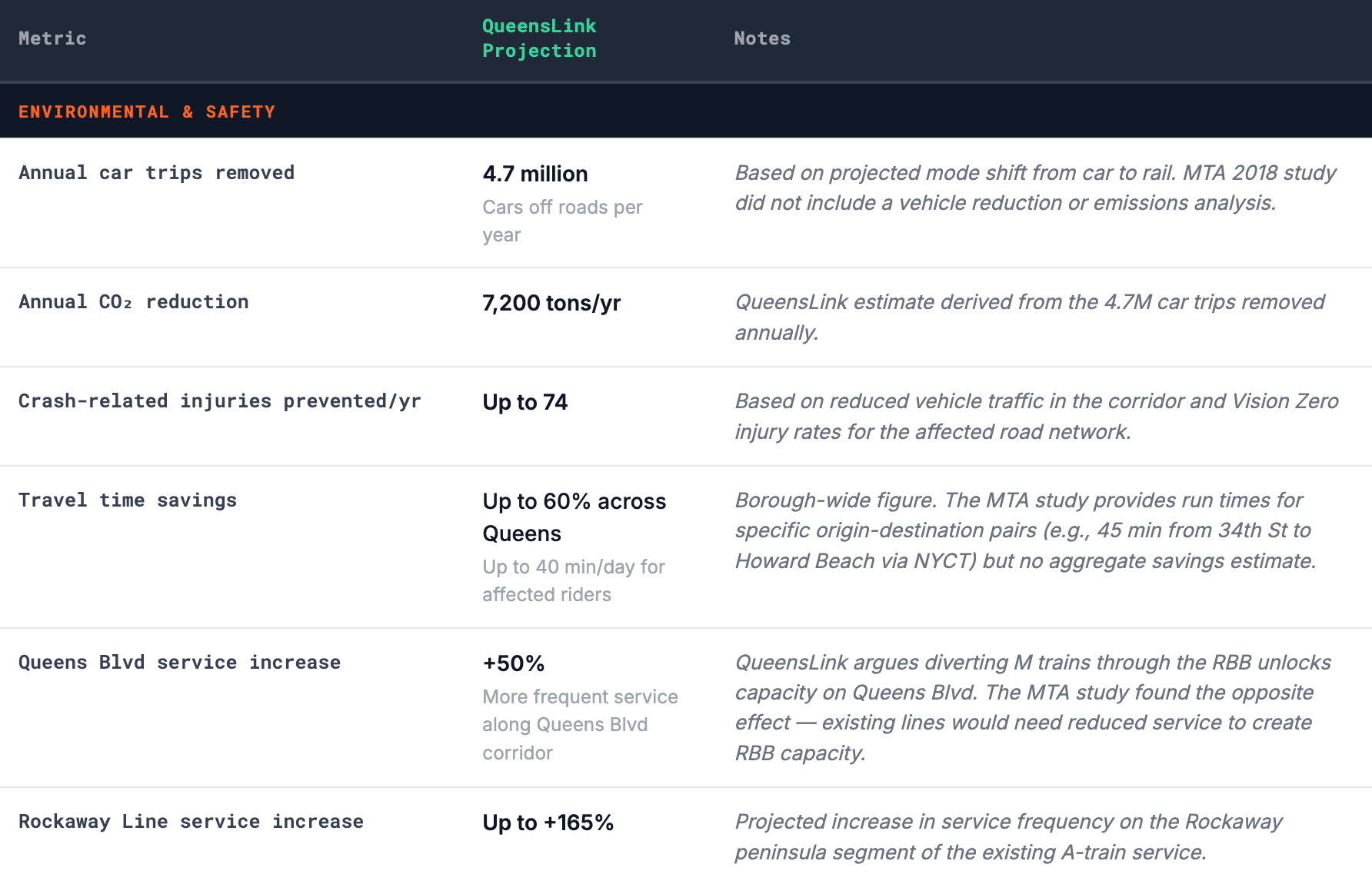
And herein lies QueensLink’s strongest card: if we accept the QueensWay proposal, what happens to these commuters? While improved parks and greenway space is in many ways beneficial, they do not fill the transit gaps for these neighborhoods.
If QueensWay supporters can expand their own proposal to include funding or consideration for expanded bus rapid transit (BRT), or other public transit projects to improve accessibility in this corridor, it would make giving up on RBB reactivation an easier pill to swallow. Without consideration for the mobility needs of this massive, diverse region of the city, even the most ambitious greenway proposal feels lacking.
Where Things Stand
Surprising QueensLink supporters, Mayor Mamdani’s FY2026 budget proposal included $43 million in funding for a section of the QueensWay proposed parks, rather than track reactivation. Prior to Mamdani, Mayor Adams’ administration also appeared to be moving forward with QueensWay plans, promising funding for the same section of the parks dubbed the “Metropolitan Hub”.
Supporters of QueensLink have pointed to big money, corruption, rich residents, NIMBYs, and other malcontents as reasons for support from electeds and advocates of the QueensWay proposal. Perhaps this is true to some extent – like the Highline, prioritizing a new park over transit access may attract high-income residents while displacing working-class ones. But I try to take these arguments in good faith, and there is no evidence that the QueensWay organization or its supporters are acting maliciously. While I may disagree with some of their stances, I have to accept the possibility that they are acting with the best intentions for their communities, just as I assume the QueensLink organization does too. And unfortunately for my urban transit ambitions, they bring up valid points regarding the difficulty of rail reactivation.
I am always a supporter of improving public transit access, particularly in areas of NYC that are so lacking in it currently. But I also acknowledge that the MTA and the City face real constraints in their abilities to deliver on every proposal and fund every project. And if low ridership or high construction costs mean this project can’t be delivered in the next 15 or 20 years, I think it becomes a fair question whether delaying transforming the corridor into usable parks and greenway today for that far-off possibility is still the right call.
At the end of the day, extending M train service will be the MTA’s decision, which it must consider in balance with all the other needs and proposals in its portfolio. If the project is viewed as infeasible by them, or less than a priority than other transit projects, then QueensLink’s proposal remains a nonstarter until the MTA and elected officials convinced otherwise. While minds can always be changed, lack of support from the MTA itself should be factored into any alternatives analysis and may further delay timelines on getting track reactivation work started.
To be clear, I was not paid or sponsored by any advocates for this article. Neither was I requested to write a pro-QueensWay article nor even asked to write anything including their perspective. I want to give props to these advocates for simply wanting to have an open discussion about their goals. The opinions expressed in this article are entirely my own.
Thank you for writing this! It's really cool you actually made it out to the tracks as part of the research for this piece.
Would Queensway be open to a bike lane? 😅 Could be a olive branch to transportation activists, if it makes sense and is safe.
IMHO, the reason to support QueensLink is that the ridership is to a large degree under the city's control. If the current population can't sustain ridership, why not allow denser development in the area, and provide subsidies and regulatory relief to make it easier to build? We have to think in the long term on this one. NYC subway lines last for centuries; giving up this right-of-way simply because the park can be built 10 years faster is eating our seed corn, because opportunities to build new rail are almost nonexistent. Corridors like this one are a nonrenewable resource, and we should put this land to its highest and best use--adding to our transit network. The opportunity here is irreplaceable.