


There are nearly 4.9 million jobs based in NYC, of which about 4.2 million are in the private sector (i.e., not government jobs). And yet, in 2025, NYC only added 33,400 new private sector jobs. Even worse, through the first half of 2025 there were 4,600 fewer businesses than the previous year, accompanied by the lowest business formation for a quarter in five years.
This anemic jobs growth and business contraction affects the City’s budget, restricting public service programs and funding for agencies through reduced tax revenues. It also makes it harder for current residents to find new jobs that allow them to afford living here, and prevents new residents from finding gainful employment in order to move here. The subsequent population stagnation further restricts business formation, tax revenues, and the City budget.
And that’s not all. Look past the headline jobs numbers and the story becomes even worse. While NYC has long been known as the finance capital of the globe, it has also been the home of a diverse collection of both people and jobs. Yet in recent years, job growth in the metro has been concentrated in just a handful of industries: health care, social services, and leisure & hospitality.
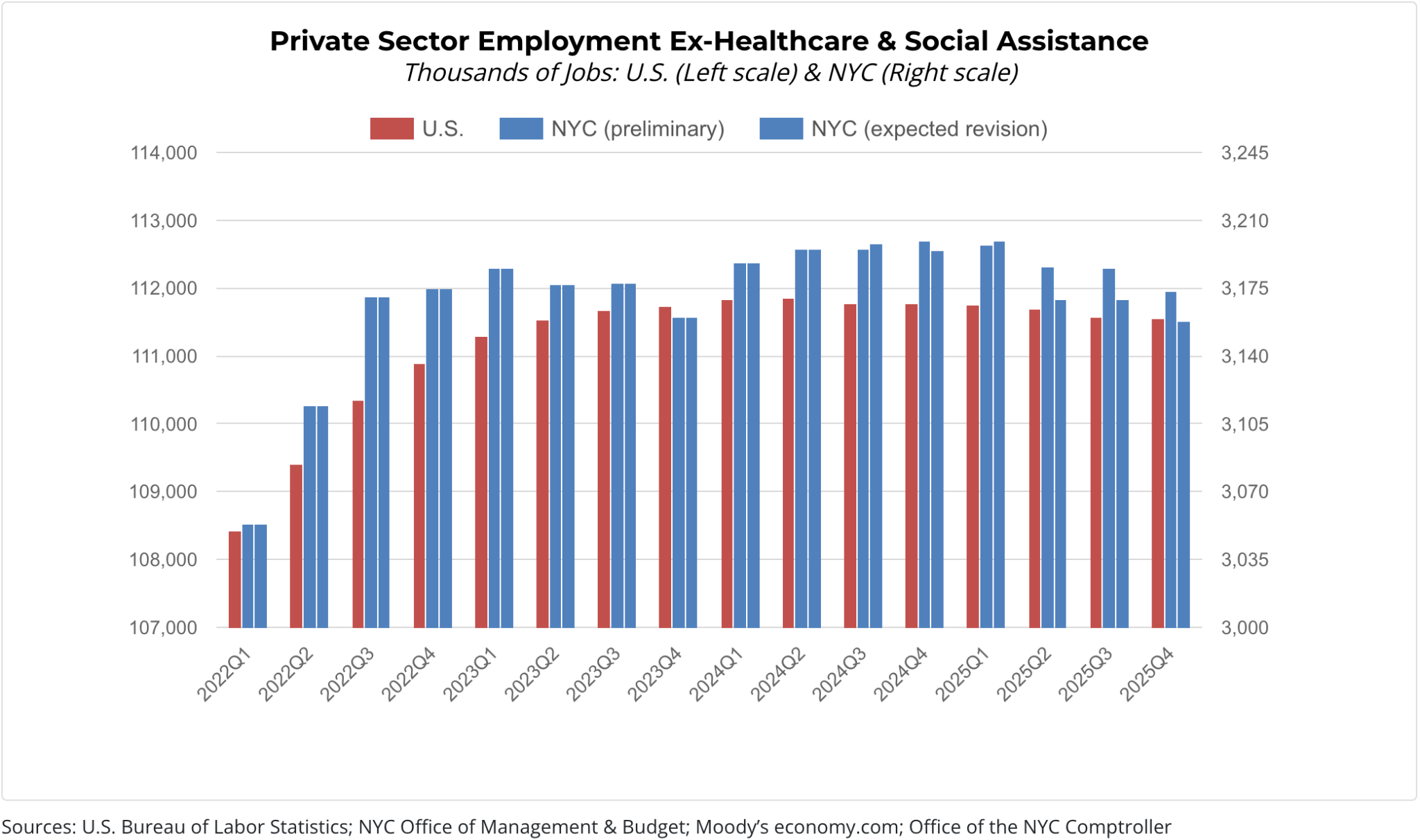
In fact, remove just the Healthcare & Social Assistance sector from the picture, and you’ll find that NYC’s job growth in 2025 was actually negative. Nearly all new jobs in the region have come from only a handful of industries, and they are industries that tend to pay less and provide few benefits. An overreliance on such a particular slice of work makes the city particularly vulnerable to economic shocks or pullbacks in these industries.
In this post, I will walk through recent labor market data for NYC and explain how the concentration of new jobs in these sectors is affecting the City’s finances and economic growth. I will then discuss several strategies for NYC to diversify and strengthen its jobs base, which would lead to a healthier and more economically resilient city.
Where are the post-COVID jobs gains coming from?
Nearly all job growth in NYC since the COVID pandemic that began in March 2020 has occurred in a single sector: Healthcare & Social Assistance. Jobs in this industry are often called the “care workforce” or “care economy”, referring to the nurses, health aides, and childcare occupations that largely compose healthcare and social assistance work. As mentioned, if you remove the 253,000 net new jobs added to NYC’s care workforce between early 2020 and August 2025, the change in employment across the rest of the City’s private sector is negative. This includes traditionally strong and large NYC industries like Retail and Accommodation & Food Services, which actually suffered some of the largest job losses of any industry in that same time period.
This trend is worrying for two immediate reasons:
Reliance on new jobs from a single sector of the economy leaves the city especially vulnerable to economic shocks or contractions in those sectors, and
Care work provides some of the lowest paying jobs of any industry
In the highest paying industries, like Finance and Information, there were only 25,000 new jobs in that 5-year period. So while headline unemployment may look pretty good sitting at such a low rate, much of that employment is concentrated in jobs that barely (or do not) pay a living wage in the city. And while there is an argument that any employment is better than unemployment, care economy jobs are not what the NYC Comptroller’s Office itself classifies as “good jobs”.
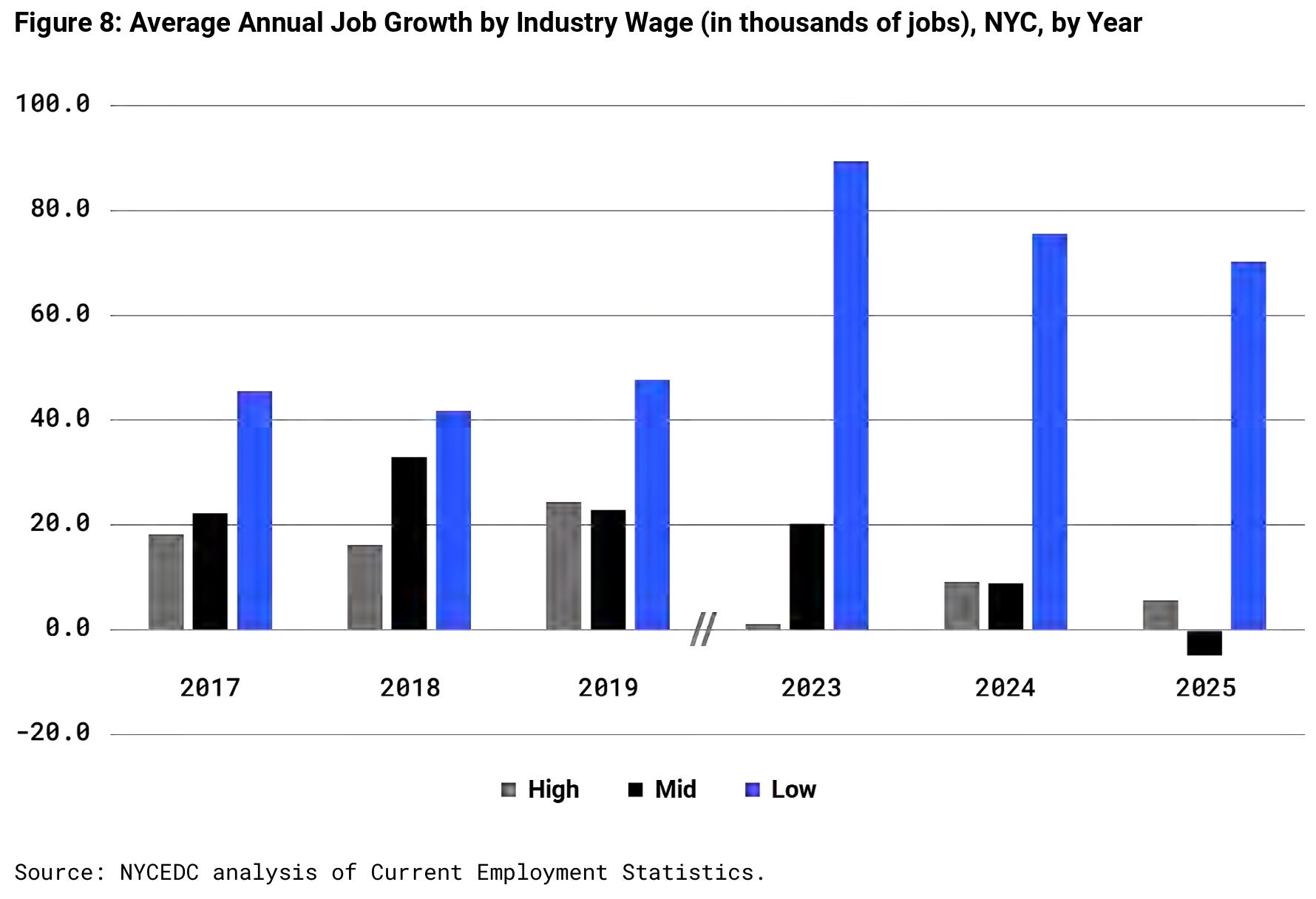
In May 2025, NYC Comptroller Brad Lander released a rubric for judging the quality of a job based on four conditions: is that job (1) paying a living wage; (2) offering full-time and year-round employment; (3) providing employer-sponsored health insurance; and (4) avoiding physically demanding or hazardous conditions, unless those risks are offset by higher pay. The idea is that a job meeting these criteria is a “good job” in that it at least “meets a basic set of conditions for economic security and workplace standards”. About a third of NYC residents have been working in good jobs over the past few years.
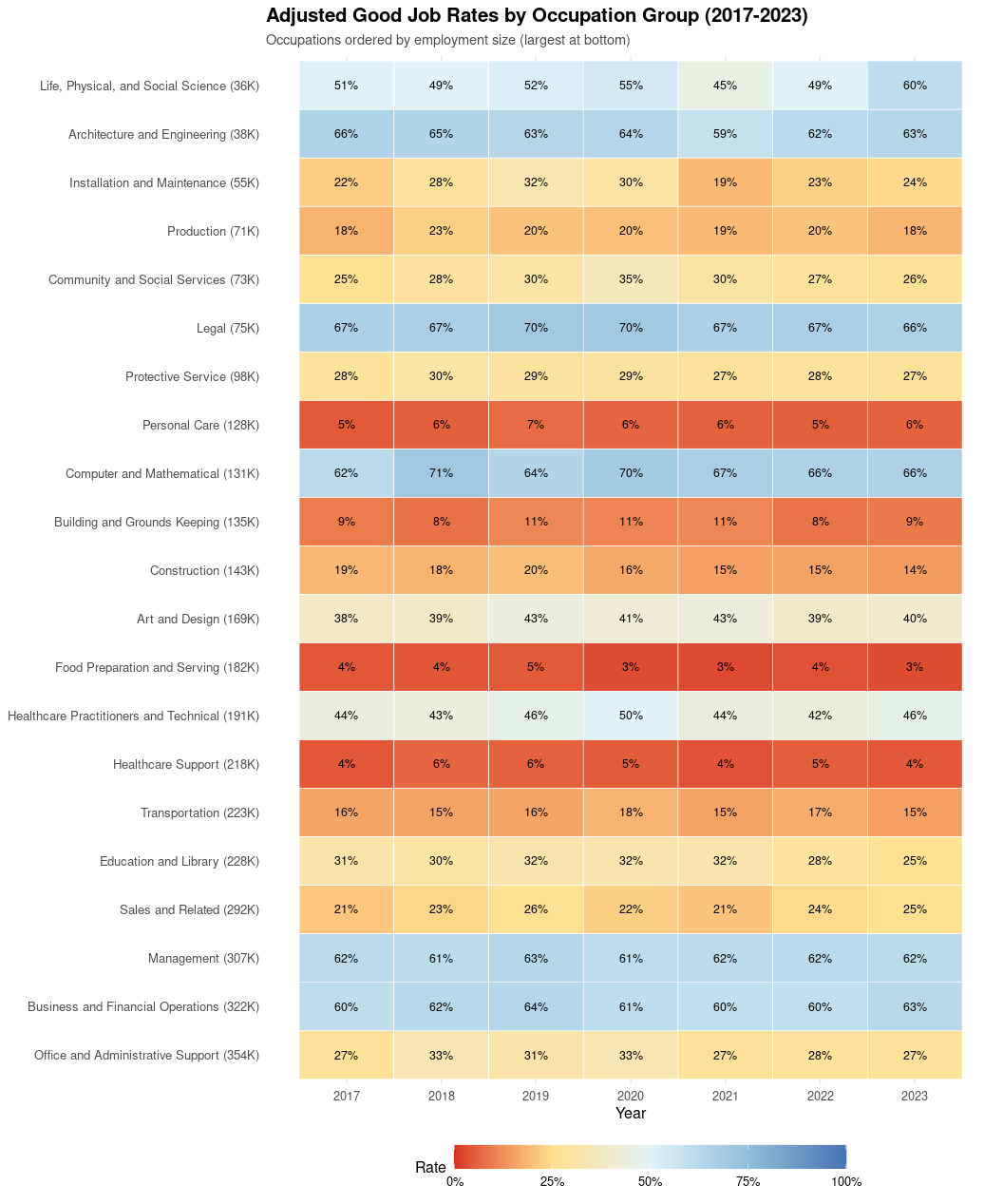
And the occupations with the lowest share of good jobs? Personal Care, Food Preparation and Serving, and Healthcare Support. Two of those three are care economy jobs, representing over 350,000 NYC workers today, with an average share of good jobs around 5%.
This means that the majority of new jobs added since 2020, and a growing proportion of NYC’s overall job base, are jobs determined to be of poor quality. These are positions that do not pay enough for workers to afford living here, do not provide critical health insurance benefits or stable employment (forcing NYC itself to step in and provide this safety net, costing the city money - more on that below), and are detrimental to workers’ health due to poor working conditions.
To be clear: I am not advocating that care work is not valuable work (in fact, it fulfills some of the most valuable needs for society) or that the City should discourage job growth in these sectors. Instead, I am calling for an intentional diversification of job growth through attracting other types of jobs, particularly offering higher pay and benefits, to complement the labor growth in the care economy. At the same time, reforms should be pursued to make healthcare & social assistance jobs more desirable and rewarding financially.
How does job growth concentrating in care work affect NYC’s finances?
At the surface, it’s apparent why job growth concentrating in low-paying sectors would be bad for NYC’s budget. Less income for residents means less revenue from income taxes collected from the City’s residents, as well as less disposable income to be spent on consumption, which means less sales tax revenue. In fact, personal income tax revenue is forecasted to be one of the slowest growing tax revenue sources for NYC over the next few years.
But the problem goes even deeper than that.
Not only are the industries where job growth has occurred in recent years the ones providing fewer benefits, a large portion of these jobs also provide an income below the poverty line in NYC (set above $47k in 2023) . The combination of few benefits and low pay means that the government itself must often step in to both provide workers’ health insurance and help cover the cost of living.1 The City’s budget gets constrained on both ends, with lower income tax receipts from workers who earn less and higher safety net expenditures for workers who can’t afford to live in NYC without assistance.
Above table is synthesized from multiple data sources with the assistance of Claude. All numbers represent estimates and should not be treated as precise.
Note: Workers in these industries often receive their health insurance from Medicaid/ACA, where the government covers part or all of the cost. While the federal government covers much of this cost through grants, the State and City chip in too. For example, as mentioned in Maximum New York’s recent article, “New York spends more per capita on Medicaid than any other state. Of the ~$260 billion annual state budget, about $116 billion is Medicaid”.
Many of these workers are living in rent controlled units or in apartments subsidized by City housing vouchers, and programs like CityFHEPS are expected to cost over $2 billion in FY27. In fact, NYC’s housing vouchers program expanding at the same time housing costs have exploded has become a major driver of the budget gap highlighted by Mayor Mamdani and previously by fiscal watchdogs.
As more and more money is spent by NYC on such programs, it takes away funding available for other initiatives like free buses or street improvements. For NYC to continue funding these programs at all, it will need to generate much greater job growth, particularly for jobs that carry higher pay and better benefits.
What can NYC do to attract better and more diverse jobs?
Fortunately, not all is doom and gloom for NYC’s labor market. The metro still holds several key advantages that can be utilized to attract more jobs. These include a world-leading financial system with plenty of capital ready to invest, world-class research universities, a top-tier creative and media industry ecosystem, and an enormous, growing market for climate and transportation infrastructure. The Mamdani administration should establish new public initiatives to deploy these structural advantages in order to diversify and expand the jobs base.
These new initiatives could follow the example of the Economic Mobility Networks program recently launched by the NYC Economic Development Corporation (EDC). Additional programs launched by city government, in partnership with both private and public organizations, should focus on the following areas:
Leading in Tech and Applied AI:
The technology sector sits among the highest-income employment in NYC’s labor market, and the funding spigot has been on full blast. As NYCEDC’s State of the Economy 2025 report puts it, “New York City-based companies raised $67 billion in venture capital funding from 2022-2024 -- 11.0% of nationwide funding…the number of Tech establishments rose 15.8% from 2022 to 2024, during which time the number of establishments in the private sector grew by only 2.0%.”
However, this capital growth in NYC’s tech sector has not been matched by labor growth. Employment in tech has stagnated since COVID, and the City needs to prioritize attracting and developing more of these high-paying, high-benefit, high-productivity jobs.
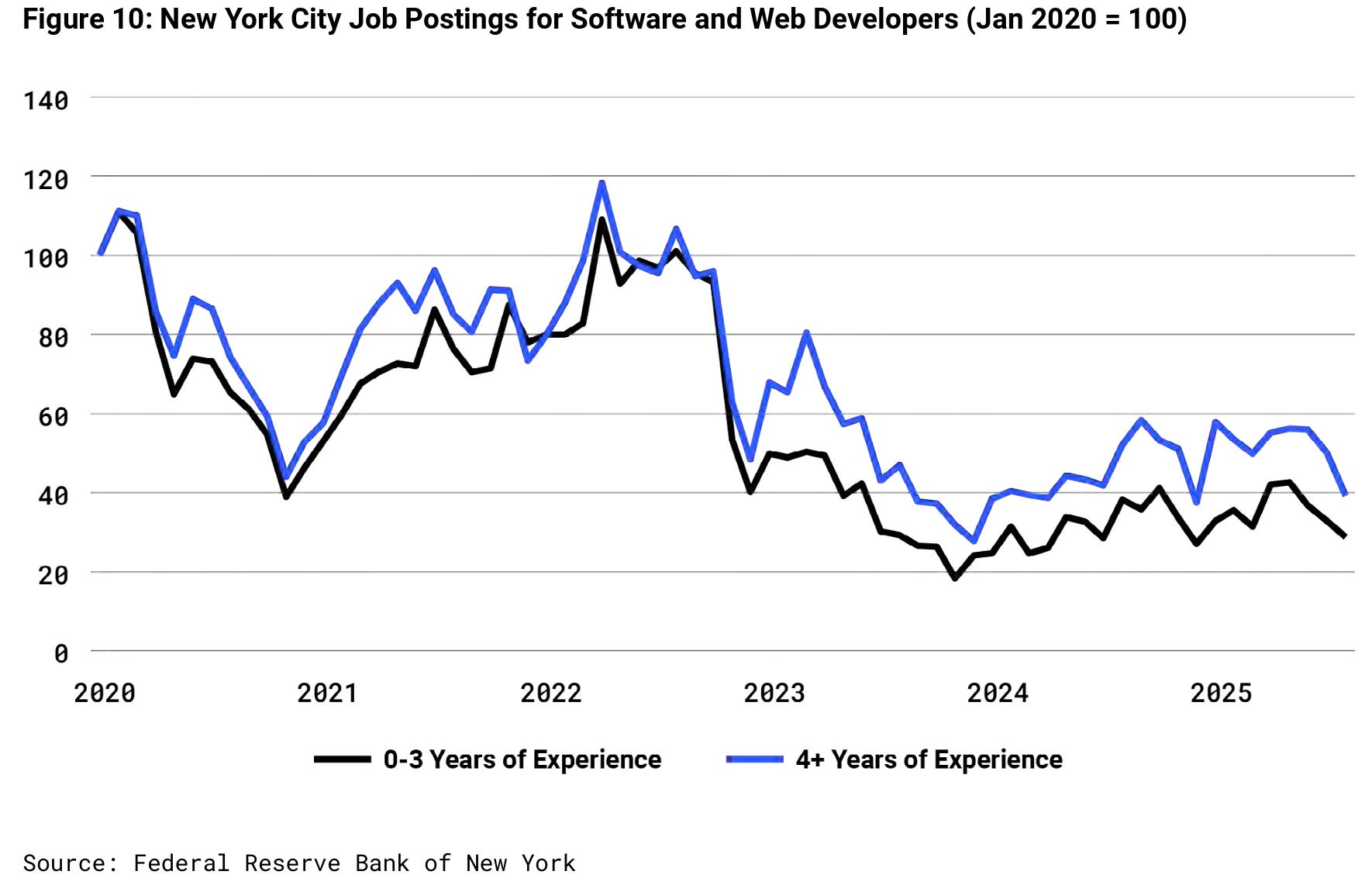
One great example is the partnership between NYCEDC and Tech:NYC to develop the tech sector, called Obviously NYC. The program incentivizes founders, entrepreneurs, and investors to locate tech companies and hire workers in NYC and builds a network among these potential tech employers. NYC should better market and promote the many tax credits and other financial incentives offered to founders. At the same time, it can launch incubators to encourage homegrown tech entrepreneurship and connect them to the network being curated by Tech:NYC.
In line with these recommendations, AI Nexus, an NYCEDC-private companies collaboration to base startup accelerators in NYC and expand the region’s AI business ecosystem, should be greatly enlarged. NYC can attract further tech talent and startups by expanding targeted visa/talent programs, fostering university-industry partnerships, and collaborating with tech companies already based here to promote NYC’s brand as a leader in emerging technologies.
Growing the Life Sciences sector:
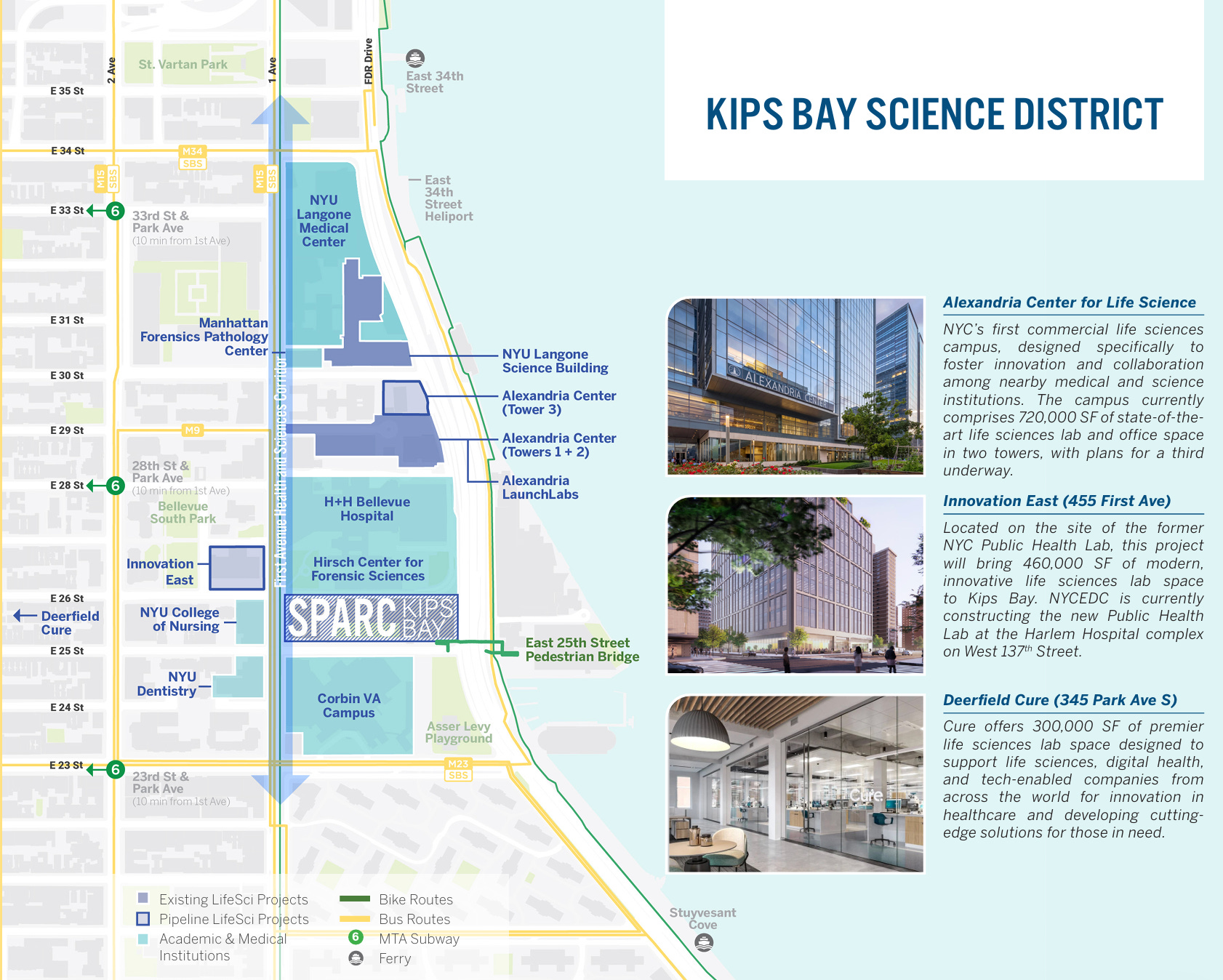
Just like the tech sector, life sciences has seen a huge boom in investment and new businesses but little accompanying job growth since 2022. NYCEDC and local universities have also been investing in the Life Sciences/biotech sector, through programs like SPARC. SPARC Kips Bay is a full Manhattan city block being converted into a Life Sciences jobs and education campus combining CUNY colleges with private biotech towers. Backed by $1.6 billion in City and State funds and $2 billion in private investment, the project is expected to generate $42 billion in economic impact over 30 years. That means that the public investment for this project will be returned by just over one year of the expected impact.
NYC must continue supporting its university research centers and advocate for funds from the State and seek new sources to replace federal funding cuts. Assisting the development of new labs/research centers and incentivizing researchers to relocate to NYC can accelerate workforce development here.
Building the Green Economy:
Another potential opportunity is in climate technologies, a fast-growing sector that will provide significant investment and employment opportunities for years to come as we face climate change challenges. Just like the above sectors, the trend in climate tech has been a growth of funding while job growth has stagnated. Recent federal funding cuts and regulatory changes by the Trump administration also present significant headwinds for green technologies.
The Brooklyn Navy Yard project is one example in this space of combining new technology with climate-focused initiatives, such as Blue Highways, to transform land use and create new jobs. Blue Highways activates the waterfront for sustainable logistics and manufacturing, making NYC more resilient to supply chain disruptions and tapping into the City’s origins as a port town. Rebuilding NYC’s shipping and manufacturing industries could create thousands of middle-income jobs in the trades while also providing clean energy and a resilient supply chain.
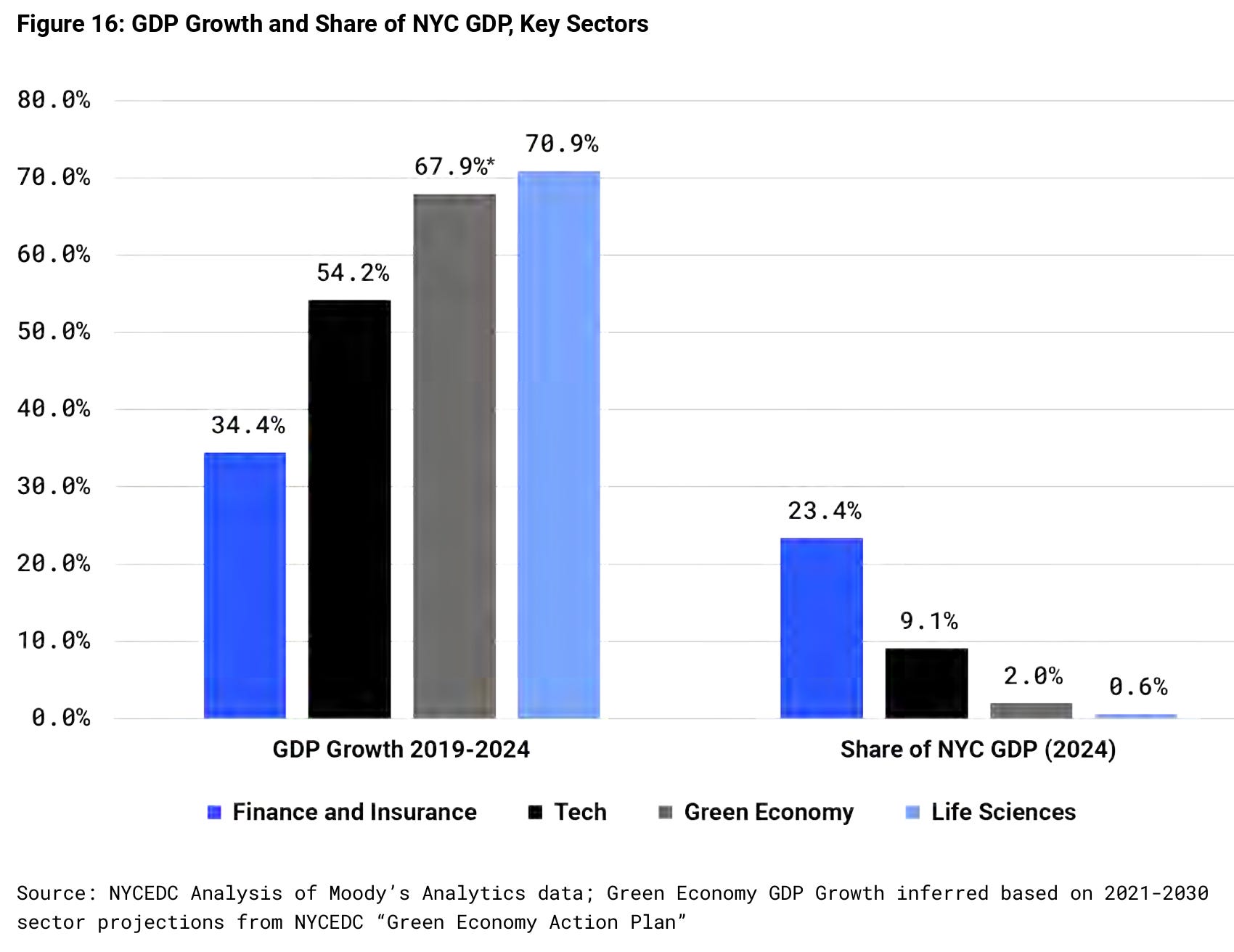
Ultimately, the City will have to pursue all these initiatives on a much grander scale to meaningfully move the needle on the labor force. But they provide examples to build new programs off of and excellent examples in how to utilize emerging technologies and growing demand to catalyze job growth and business creation. The good news is that money poured into such job creation programs frequently return multiple times their investment.
NYC should also not disregard or discourage care economy job growth while pursuing these new types of work. The care workforce is already significant, not just here but nationally, and will continue to grow as America’s population continues aging. The goal is not to replace these jobs but to diversify the economy while pushing for reforms and wage growth for care workers. To continue funding safety net programs for these workers, attracting high-income industries will be necessary. A more robust City economy can better support higher wages for these jobs and create an NYC resilient to economic shocks or stagnation in any one industry.
We won’t get into how and why such no-benefit jobs are allowed to exist and the implications of the government stepping in to fill private sector gaps in providing livable wages. There is too much to say on this topic, but it is certainly an important discussion to have.
Really nice deep dive into NYC.
I do think until immigration policy is changed it will be tough to change the picture much. Due to immigration restorations, NYC and other US cities are currently in a bit of a zero-sum battle over workers. We are facing the same labor issues as the rest of the US.