


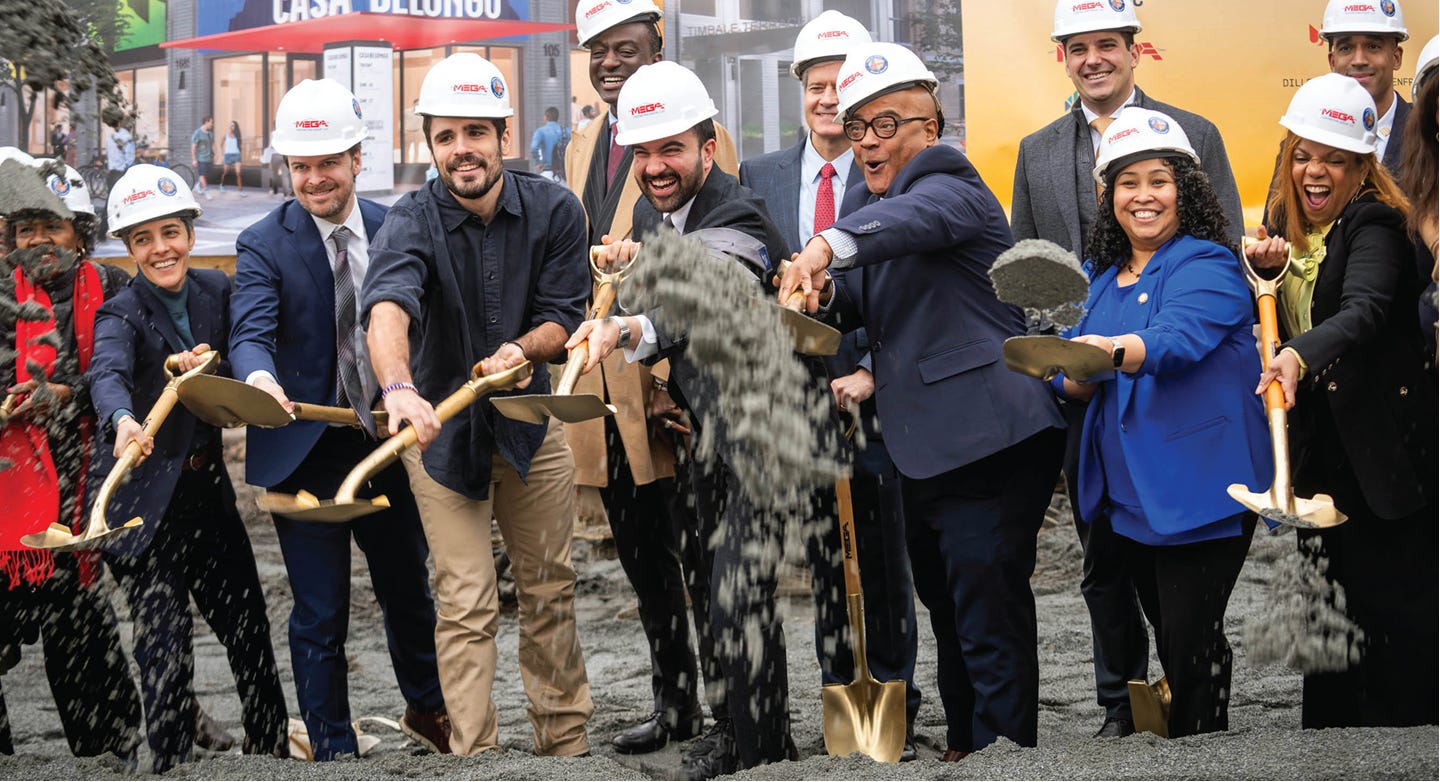
New York City may be in its most pro-building era since the passage of the reigning zoning resolution in 1961.
One piece of evidence that we are in this new, pro-housing and pro-transit growth era can be found in messaging by both the current Governor and Mayor: Hochul’s Let Them Build program and Mamdani’s relentless hammering on the affordability crisis issue while campaigning (and continuing on through today). It is no coincidence that the Mayor was swept to victory on this platform and that the Governor appears poised to do the same this fall.
For further evidence, just take a look at a partial selection of recent and planned progress on transit and housing:
Transit:
The 7 train extension to Hudson Yards (and all of present-day Hudson Yard’s towers)
Phase 1 & 2 of the Second Avenue Subway
The Interborough Express
Moynihan Train Hall & Penn Station renovation and expansion
East side access & Penn Access1
Housing:
Passage of the City of Yes bills
Voter approval of the 2025 Charter Revision Commission housing ballot proposals
Mayor Mamdani’s Block by Block Housing Plan
Inclusion and passage of SEQRA (State Environmental Quality Review Act) reform in the New York State FY27 budget
The political will to build is clearly there. The constraint is no longer whether NYC wants to build, but whether it can build fast and cheap enough to make a real difference.
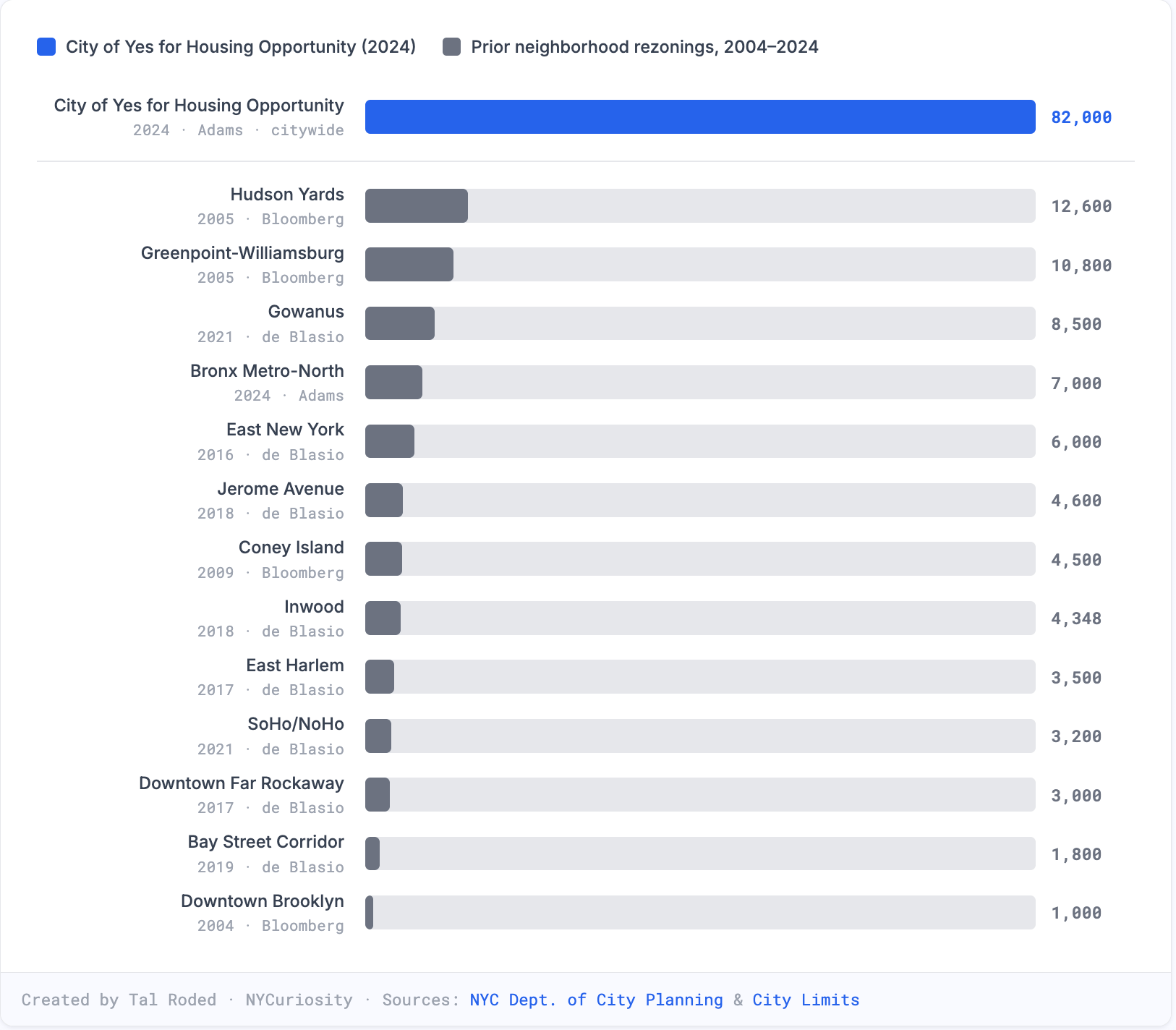
On the housing front, recent legislative wins have not yet translated to significant growth in new units, though the rate of new housing development has picked up. The number of potential new units allowed by just the 2024 City of Yes rezonings (~82,000 new units) is more than the additional housing added by all previous rezonings over the past two decades (~70,000 new units).
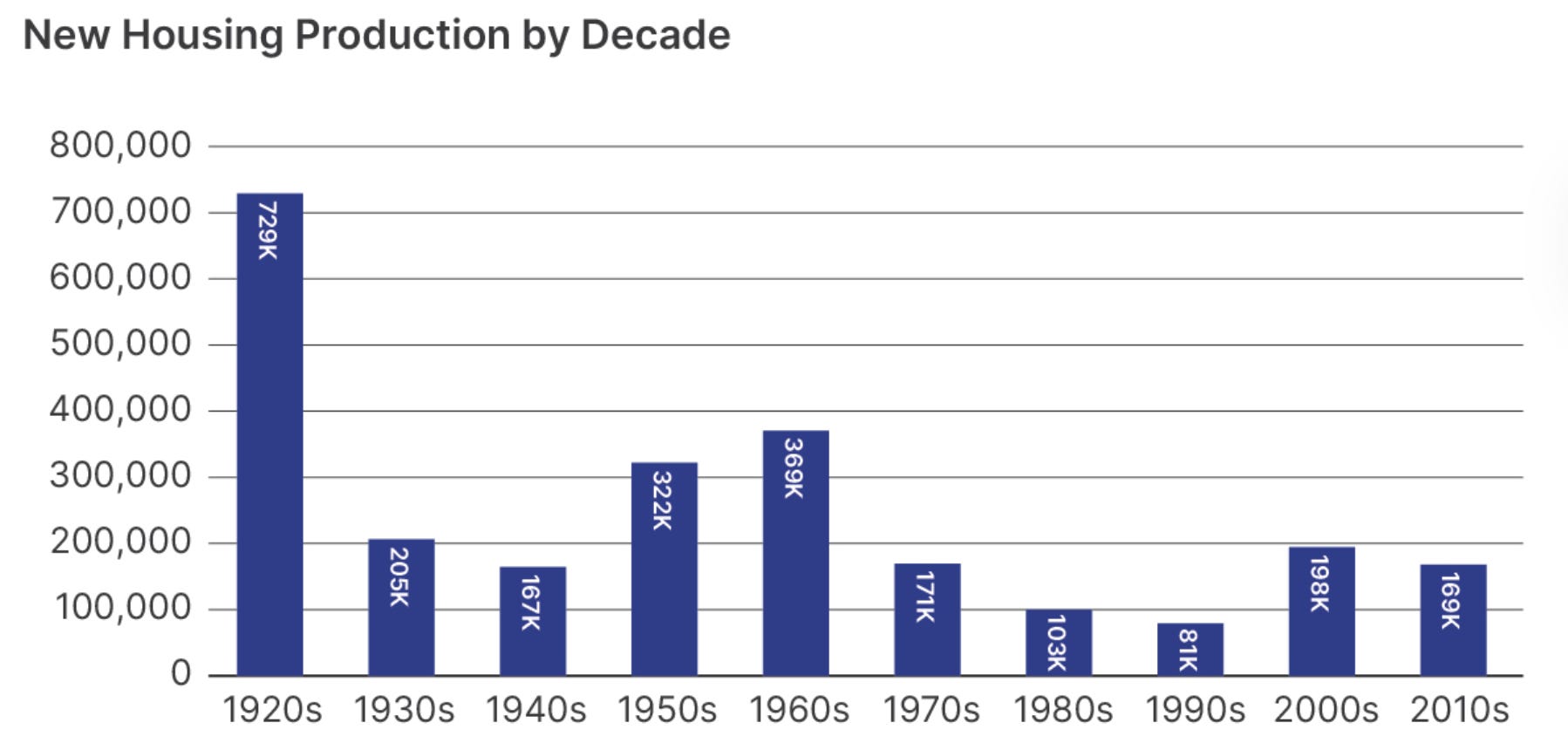
Yet much, much more building will be needed, not only for housing but for New York’s transportation, energy infrastructure, and streets.
The amount of new housing in development is still not nearly as much as was built by NYC in previous decades or enough to meet projected population demands. Important questions about where public funds should go to best support transit – free buses or more subway extensions – remain hotly debated. While pro-building, pro-growth politicians are finally pushing policies in the necessary direction, much more will be needed to dig the city out of the infrastructure hole it ended up in from decades of underinvestment.
Let’s take a look at upcoming opportunities New York has to tackle these intertwined fronts of the affordability crisis, what it could be doing better, and how recent policy developments have unlocked growth.
More Rezonings and Development Around Transit
Mayor Mamdani recently released the Block by Block: The Housing Plan for A New Era, which covers many strategies to make NYC more affordable. The plan lays out a vision for 200,000 new housing units and preserving another 200,000 existing units over the next decade.
While the strategies involve everything from improved tenant protections to community land trust investment, a particularly exciting element is enabling transit-oriented development (TOD). TOD is a building block for providing accessibility for all New Yorkers, maximizing the benefit of new housing by placing it right next to transportation nodes. Optimizing the placement of new units by coordinating them around transit hubs also serves as a double win for affordability.
Thanks to the passage of City of Yes, the largest update to the zoning resolution since the 1960s, there is now greater opportunity for adding density around transit stations. Paired with the Affordable Housing Fast Track created by the 2025 CRC proposals, new housing can be built faster and in the places that best connect residents to jobs and opportunities.
Many other currently transit-rich communities have been stymied from growing by outdated zoning regulations that remain in place. One prime candidate is the area south of Prospect Park, for which the Mamdani administration recently announced rezoning plans along portions of McDonald Avenue and Coney Island Avenue. Both these streets have great transit access, with the F, G, B, and Q lines nearby, but need to be freed from outdated zoning regulations to actually create new housing in the area.
While these are the first neighborhoods to be targeted for upzoning by the current Mayor, they certainly cannot be the last. The Mayor should look at further options on where to add TOD, especially in parts of the city where growth is forecasted to happen at the greatest rate.2 Adding housing in these neighborhoods will go the furthest in addressing affordability. One upcoming candidate is the corridor of neighborhoods that will receive new transit access from the IBX (see more below).
Electeds representing neighborhoods that are prime candidates for rezoning should also keep in mind that they can’t shift all societal needs purely onto housing developments. Too many asks result in housing becoming unaffordable to build and drastically elongated timelines. With each proposed housing development, there needs to be discussion of what the housing can solve and what needs to be addressed by other means.
These discussions can and should include residents, community boards, Councilmembers, and citywide officials. But such involved parties would do well to remember that voters spoke overwhelmingly in the last election that they want more housing. While there are challenges with determining where and how to build the new housing, there are also challenges due to delays and inaction. Costs go up, further maintenance is needed for older housing stock, public sentiment shifts against the government, and lost trust further blocks the ability to act.
The MTA needs to build faster and cheaper
It is no secret that New York’s transit capital construction costs are among the highest in the world. Cost per mile of new track, for one oft-cited metric, is wildly higher than other major cities. Tackling these costs and finding ways to make transit funds go further will be key to expanding the MTA’s portfolio.
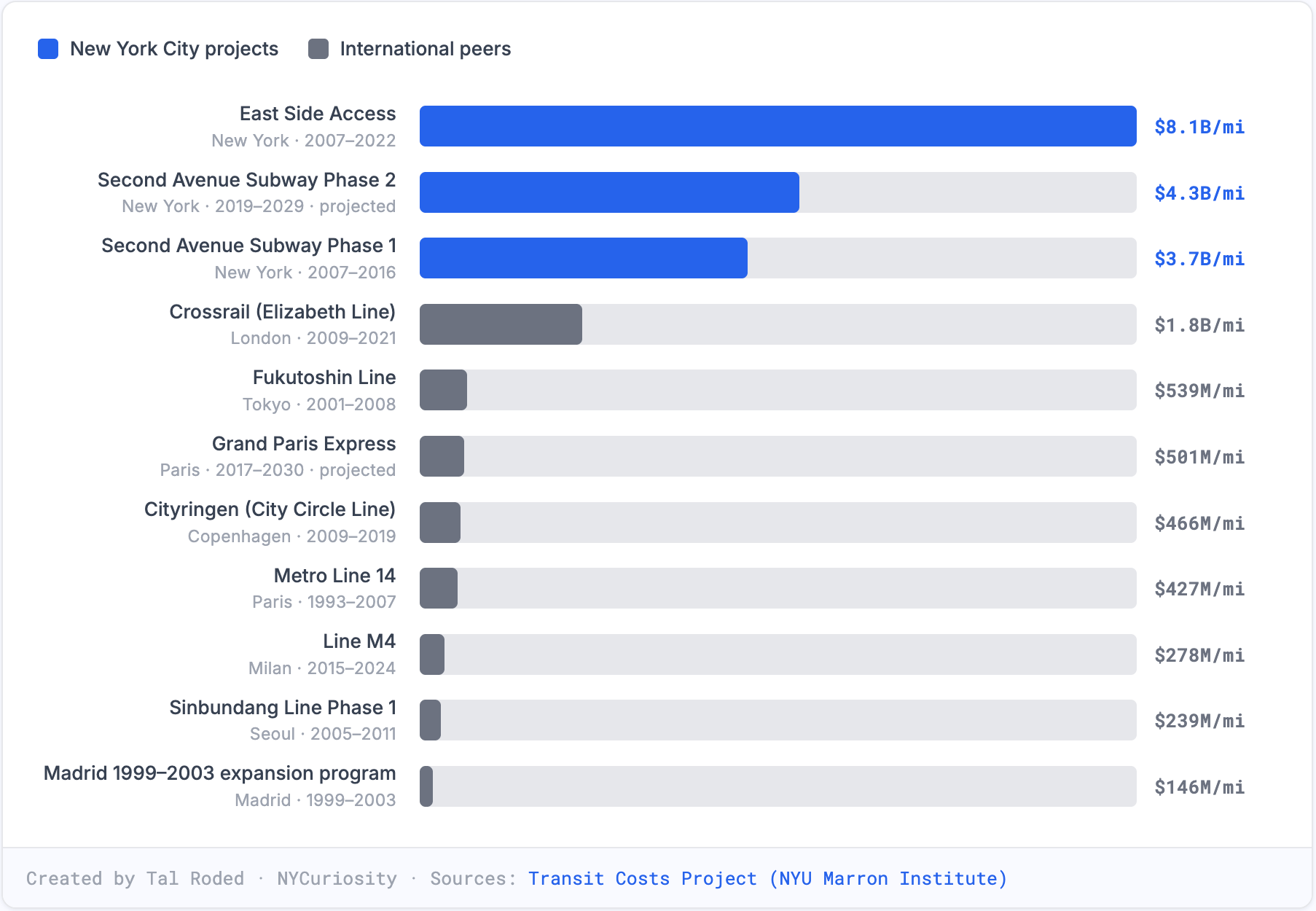
Streamlined state environmental review, passed in the FY27 State budget, can be a massive opportunity for the MTA. The reduced timelines created by SEQRA (State Environmental Quality Review Act) reform can take months, if not years, off development timelines and reduce uncertainty in approvals, further lowering costs. One immediate application is speeding up the tunneling for the Second Avenue subway extension. When timelines are shortened and costs go down across the board, the scope of transit projects can be increased and more projects can be pursued.
Being clear about scope upfront through capital planning is another money-saving tool the MTA has yielded well in recent years. One example is switching station elevators from stopping in a mezzanine level to having the go direct to the platforms. This one small change that was planned ahead of station construction has saved the MTA hundreds of millions. Planning ahead reduces costs and identifies areas for innovation.
Of course, the unpredictability of funding increases costs. Recent transit projects in the region have unfortunately dealt with not even receiving funds that are obligated to them. The hope is that future funding decisions will become less arbitrary and more consistent. On some levels, this is not up to the city, state, or MTA. But in other cases there are opportunities for local actors to do more.
For example, the predictability of zoning in new areas following City of Yes is an opportunity to cross-subsidize transit developments in those neighborhoods. Developers know they will be able to build in these areas and can unlock financing. Continued rezonings and new transit projects will increase land values and provide opportunities for new financing.
New Funding Sources to Unlock Capital
The MTA relies more on public funds for both maintenance and expansion projects than many other major transit authorities, and that funding has not been consistent historically. TfL (London’s transportation governing body), for one example, is much more fare box supported than the MTA. As a result, TfL can better finance its state of good repair through fares, and then use government funding to pay for capital projects.
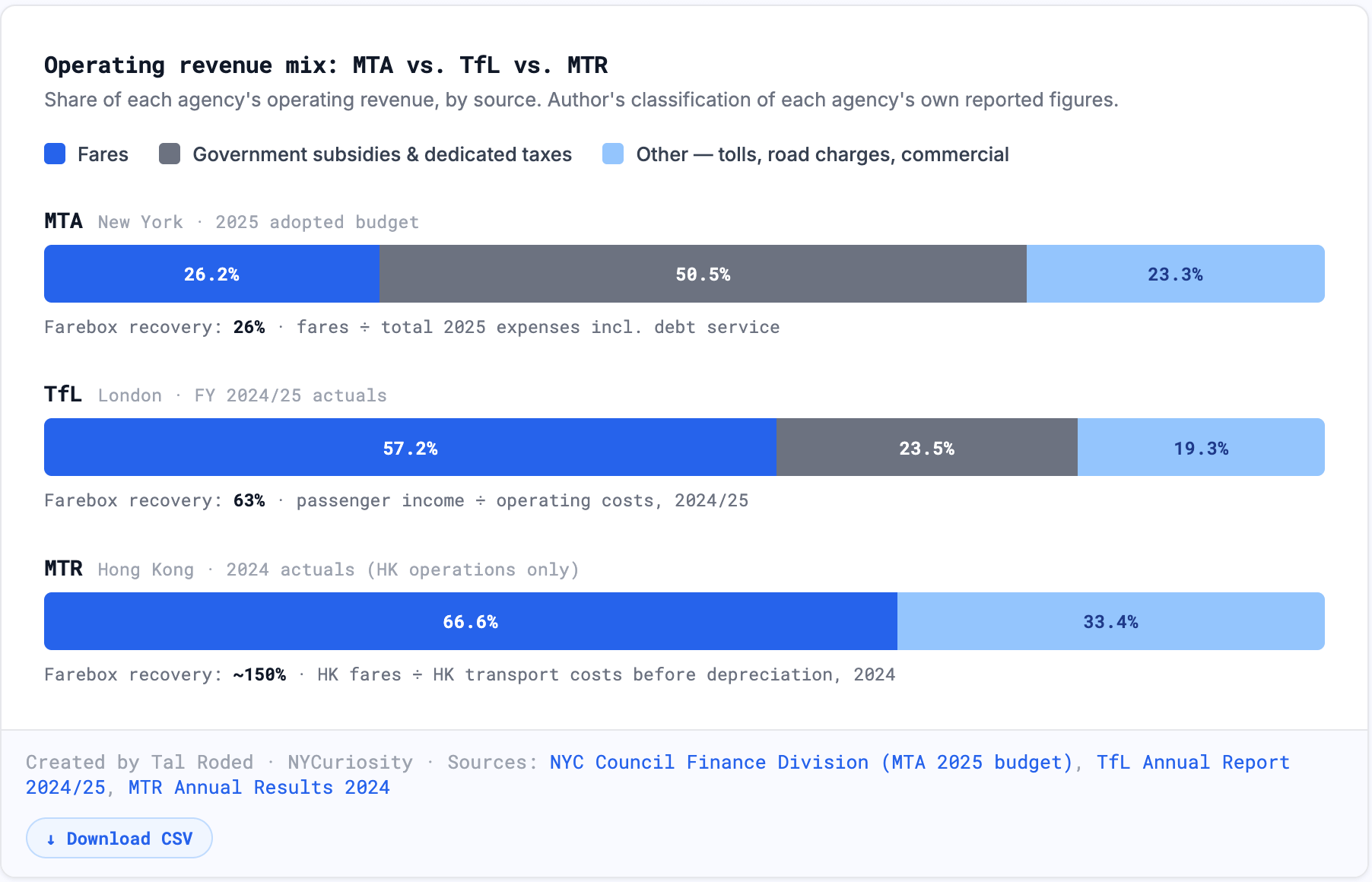
One encouraging sign here has been the re-authorization of land value tax around new transit. Land value tax is a great source of funding, as is value capture by public agencies. Publicly acquiring property, sitting on it while increasing the value of the land, and then disposing of it afterwards for a profit has been a key strategy for the MTA. One example is at 125th St/Park and 125th St/Lexington: the MTA acquired these lots, got them rezoned, and will be able to sell these properties once the Second Avenue expansion is complete.
This will bring in tremendous value, but it is not enough.
People speculate where they foresee new transit, and those who get in early capture much of the benefit. To combat this, the State can go even further than land value tax authorizations, such as with automatic upzoning around new transit and automatic land value capture when new transit uplifts values.
A Perfect Opportunity to Deliver Affordability: The Interborough Express
Transit improvements and expansions must be talked about incessantly, decade after decade, to bring them to fruition. Ideas that seemed fantasies decades ago are becoming reality today, but only through persistence and moving toward their acceptance.
A shining example of this is the Interborough Express (IBX). The IBX began as an idea proposed by the Regional Plan Association (RPA) in 1996. Only in 2022 did Governor Hochul provide key support to move the IBX forward, and it is now in its environmental study phase.
The Interborough Express Might Be NYC’s Best Transit Investment in Decades

The Interborough Express (IBX) could be one of the most impactful transportation projects in NYC of the past several decades. The first new subway line, rather than an extension of an existing line, since the 1930s. The only line, besides the G, that would not connect to Manhattan, but would rather serve Brooklyn-Queens commuters.
The IBX will add 14-miles of above-ground track with new stations, connections to 17 subway lines, the LIRR, and buses in Brooklyn and Queens. The connections and accessibility improvements will bring new transit, housing, economic development to many Brooklyn and Queens communities.
Excitingly, many of the planned and proposed transit projects in the MTA’s portfolio are using existing right-of-way and legacy tunneling, strategies that will reduce both timeline and overall costs to deliver new transit options relatively fast and cheap for the city. Pursuing such strategies in coordination with the advanced planning and value capture tools listed above could result in returns to the MTA and public funds many times what it costs to build.
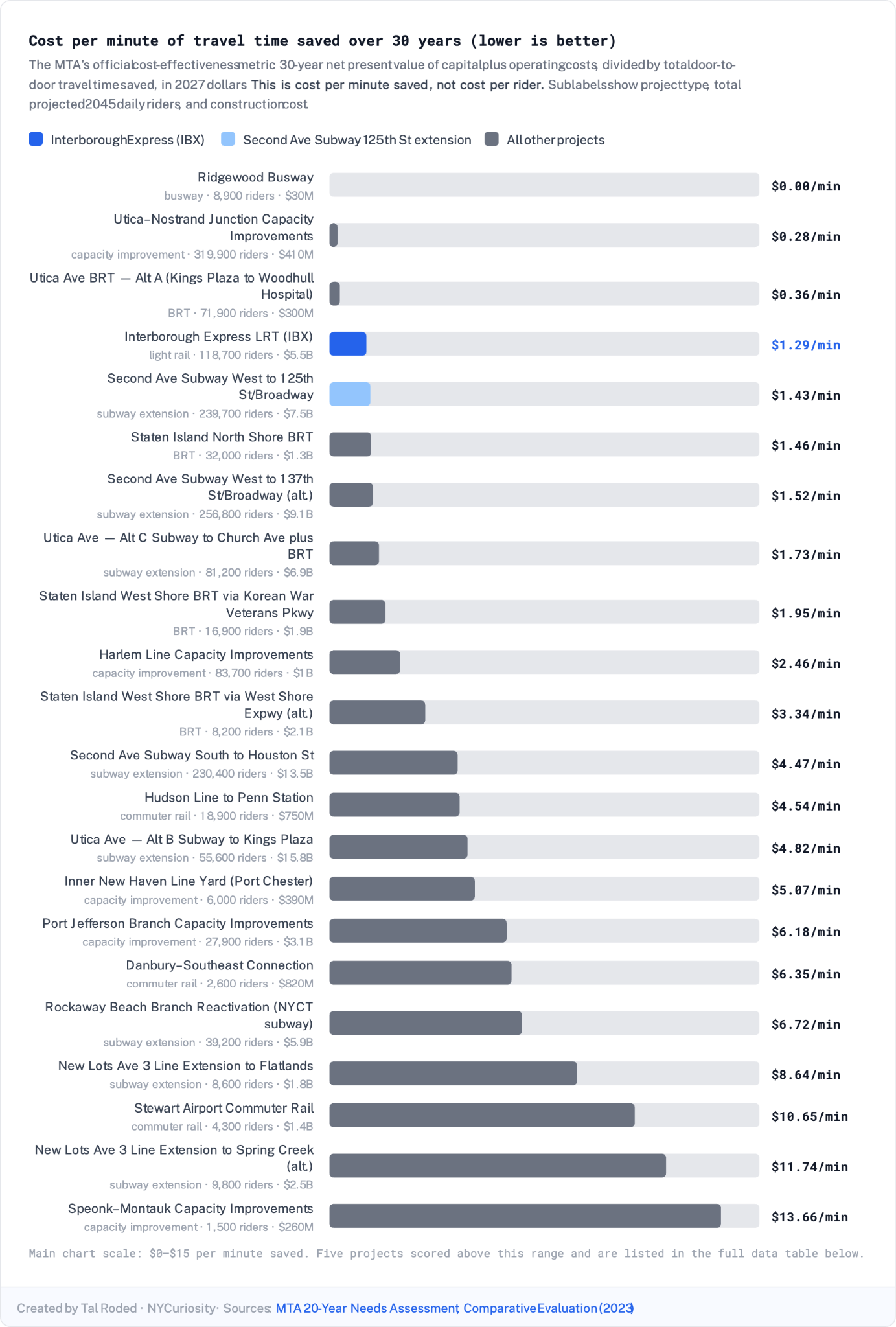
In line with this, it is encouraging to see that the MTA is being very conscious about where to place stations, collaborating with the NYC DOT on design and urban planning around the stations. More recent versions of the IBX plan have removed unnecessary stations, bringing down expected costs without affecting the expected 160,000 daily ridership estimated.
The MTA, the City, and the State must continue to coordinate transit investment with investment in the streets around transit as well. This means looking at affected neighborhoods for potential upzoning and coordinating transit improvements with other infrastructure upgrades. The end goal of any transportation project is creating vibrant places that people want to be and creating new housing and jobs. Transportation is the greatest facilitator of that, and no opportunity on this scale should be wasted by lack of ambition.
Conclusion
The affordability crisis that has increasingly restricted New York’s growth and become its defining problem in the 21st century is finally being taken seriously by elected and appointed leaders. Pro-building policies have not just been empty words and promises on the campaign trail. Nor are they original to the current politicians in charge.
Determined efforts by elected officials and by leaders at agencies including the Metropolitan Transportation Authority (MTA) and the NYC Department of Transportation (DOT) over the past several administrations have unlocked housing and transportation opportunities across the City.
More will be needed not only to bring NYC’s transportation and housing infrastructure up to modern times but also to prepare it for continued growth and success in the future.
For the many different transportation and housing projects of recent years to truly effect change, they will need to come together in a comprehensive system. For improving transit, this means looking at not just single street redesigns or individual station improvements, but constructing connected networks of redesigned streets and transit options. Low Traffic Neighborhoods and the strategies listed in the Transit Priority Atlas provide two lenses for how to successfully reconfigure streets.
With housing, rezonings and new developments need to occur citywide. Isolated upzonings or individual housing projects cannot solve the affordability crisis. Only through comprehensive zoning changes and the construction of a variety of housing types can rent and home prices be brought into check.
Options for reducing building costs in New York are numerous and must be further explored. Property tax reform would reduce costs for many residents today, while permitting reform would further speed up development timelines, bringing costs down in the future. Common sense reform of the building code, like expanding single-stair allowance and reducing elevator minimums would further expand housing supply and reduce development costs.
And lastly, without consideration of the labor market and incentivizing mid- and high-paying jobs to be created and based in New York, the entire affordability program falls apart. For NYC to continue to grow, it needs a dynamic economy that provides opportunities across industries and occupations.
Fortunately, providing more housing and transit options will better connect people to job opportunities. Elected officials and city agencies must be proud of transit expansions and new housing developments. New stations and transit access create jobs and huge amounts of value. A new station can give a neighborhood new life. New housing, new transit, and new jobs all enable each other in a virtuous cycle.
May we be at the very start of this cycle and do what we can to keep pushing the ball forward.
Each of these transit projects would singlehandedly be amongst the largest expansion of NYC transit over the past several decades, and they’ve all happened in the last decade.
Of course, rezonings are not easy and should be done strategically to ensure local support and success. The South Prospect Park neighborhood rezoning cuts through six City Councilmember districts, requiring buy-in from all of them and therefore their residents. Each proposed rezoning must involve collecting public input on activity along these corridors to form comprehensive plans not just for housing but also considering pedestrian safety, open spaces, transit accessibility, etc.
I remain very confused what transit oriented development the city actually did in city of yes. Has this been explained effectively somewhere?