


Free buses. One billion dollars for a new department of public safety. $100 billion for housing developments. These proposals by Mayor Mamdani during his campaign will require funding, and much has been made about where the money will come from. Federal sources appear unlikely, with President Trump cutting rather than boosting funding for most federal programs. The Mayor will have his work cut out for him simply to ensure that current federal grants aren’t pulled – though he seems to be off to a good start.
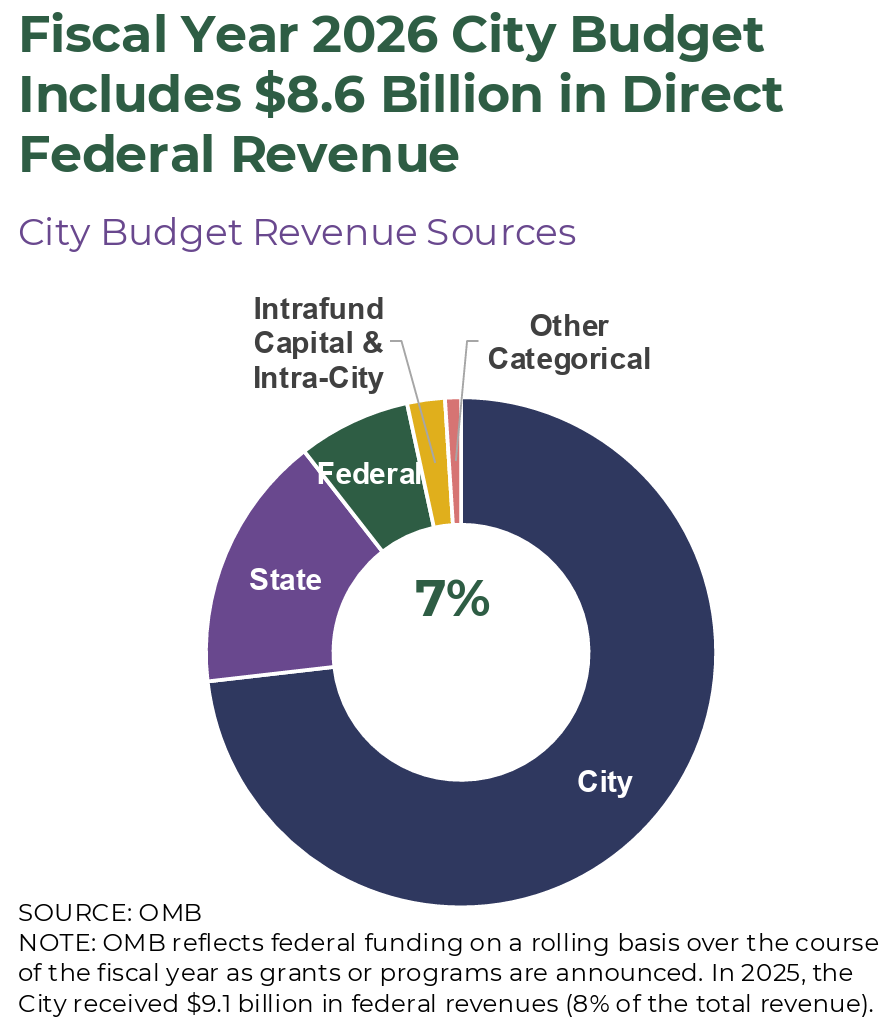
In an interview with Vital City, Meera Joshi, Mayor Adams’ deputy mayor of operations, said, “The first thing is really about the money. Follow the money, because there’s no policy or service that will come to fruition unless there’s funding.” For all public administrators, funding is a matter of choosing between tradeoffs.
These tradeoffs can take the form of:
Political feasibility vs. Potential revenue gained
Equity vs. Administrative complexity
One-time savings vs. Long-term revenue
Considering this, in what ways specifically can NYC expand its budget? One major value unlock could come from property tax reform, which Vital City has written about, Sebastian has covered here, and has more recently come up as an area of interest by Mamdani’s administration.
However, property tax reform will be a long and complicated process, with the high-likelihood voting homeowner class set to lose from it. To fund some of the costlier policies, alternative options will need to be considered. Luckily for the Mamdani administration, a number of other revenue-generated (or cost-cutting) avenues have been helpfully charted out by the Independent Budget Office (IBO).
In this post, I will dig into the IBO budget options for NYC with the largest potential revenue impacts for the City to adopt. I will provide context on how big an impact adopting the option could have for the City’s finances, what tradeoffs the policy would face, and what would be required to implement the change. By better understanding the realistic options for funding City policies, we can better frame the discussion on which of the new administration’s goals may be achievable and what the costs are for such changes.
Highest Potential Funding Options
Budget Option 1: Commuter Tax Restoration
Revenue: $1.2 billion annually
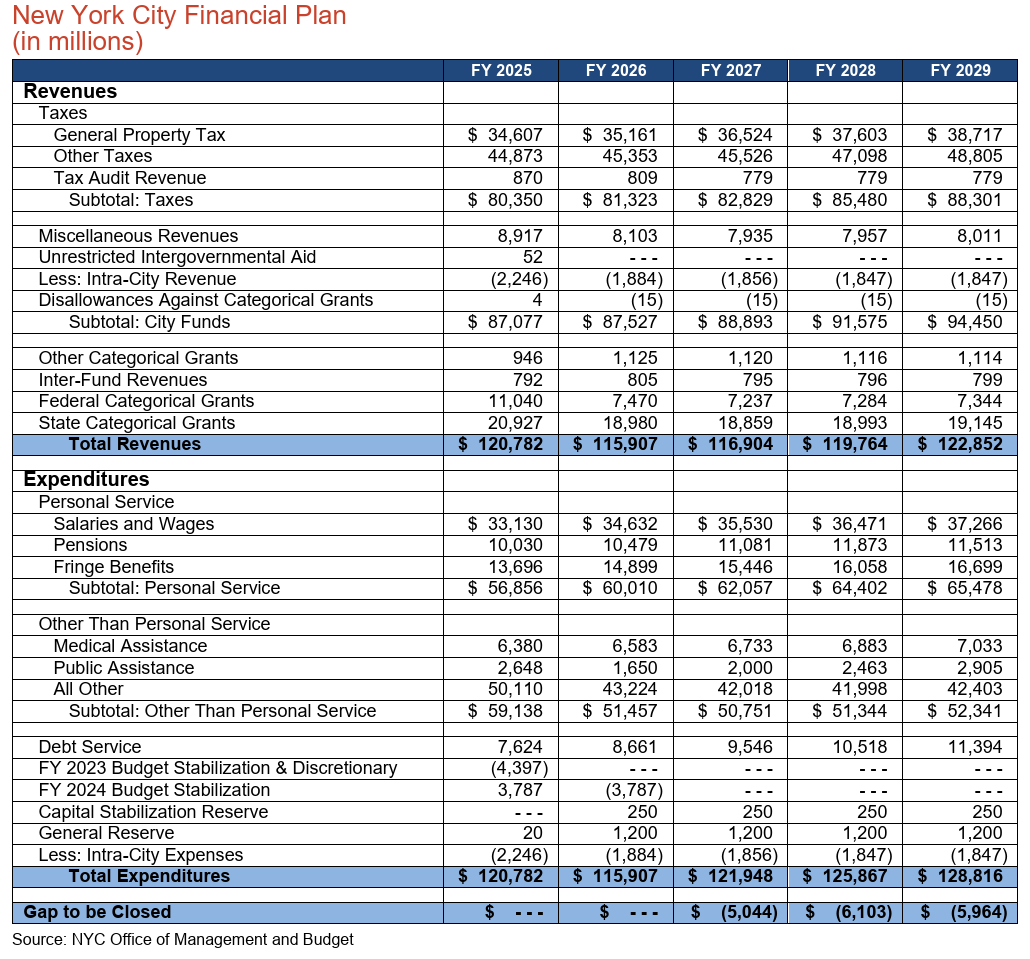
1.1% of FY26 City Budget
Requirements for change: State legislation
State involvement required? Y/N
What it involves:
Restoring the personal income tax the City charged nonresidents (i.e., commuters) paid between 1971 and 1999. Charging the same rate the tax previously did - 0.45% of salaries and 0.65% of self-employment wages - would raise the most significant amount of revenue of any IBO proposal. Commuters earn, on average, more than City residents, so a tax increase on commuters would be a progressive taxation scheme appealing to the Mayor-Elect’s politics. There’s also an argument to be made that since commuters enjoy City infrastructure (the roads, sidewalks, and maintenance thereof) and City services (protection from police, firemen, etc.), they should fairly contribute to the City’s finances sustaining that infrastructure and services.
Who might be against it:
Given that this is effectively raising income taxes on commuters, it’s clear to imagine that those commuters would oppose it. A similar coalition to the anti-congestion pricing groups would likely fight this, and Governor Hochul’s ambivalence on raising taxes, especially one that would affect suburban voters, might make this option dead on arrival. Increasing taxes on those who choose to work in the City may also disincentivize doing so or increase the cost of doing business in NYC. Thus, the potential reduction in commuters or businesses located in NYC could offset gains from the tax restoration.
Verdict:
This policy likely does not have much of a chance politically in the short-term, but it’s notable given the amount it could raise while being directed at non-City residents, many of whom are NJ/CT commuters. Eventually, a commuter tax may enjoy similar popularity to what congestion pricing has gained after its implementation. Deterring workers from living outside the City may even have a positive effect of further reducing traffic. Because this tax depends entirely on State action, there’s not much that Mamdani’s administration can do to pursue this budget option today, but it could be worthy of a long-term public campaign.
Budget Option 2: Require a Health Insurance Contribution By Current City Employees
Revenue: $785 million annually
0.65% of FY26 City Budget
Requirements for change: Municipal employee unions agreement, amendment to City Administrative Code
State involvement required? Y/N
What it involves:
Currently, NYC covers the premiums of about 95% of City employees. Requiring City employees to cover some portion of this contribution would represent significant savings for the City, depending on the parameters of the payment scheme. IBO presents a plan that would introduce graduated contributions based on salaries, with the City still subsidizing premiums by 70-95%. Implementing this change. A cost-sharing plan would be similar to most private sector schemes and could even incentivize labor unions to work with the City on lowering premiums.
Who might be against it:
These health insurance costs would be passed on to City employees, many of whom are already earning salaries lower than their private sector counterparts. Making the municipal worker benefit package even less attractive may detract further talent from applying to work for City agencies already struggling to fill vacancies. Current employees disgruntled with the change may also seek employment outside the City, weakening public institutions.
Verdict:
Politically difficult due to the certainty of municipal employee unions fighting such a change, but still possible if paired with other civil service changes that can provide these employees with alternative benefits. Implementing this change only for future City employees may make such a policy more palatable. No Mayor wants to battle with the City unions. But this option not requiring State cooperation makes it attractive, especially for immediate revenue gains of a respectable magnitude.
Budget Option 3: Extend Corporate Taxes to Insurance Company Business Income
Revenue: $672 million annually
0.56% of FY26 City Budget
Requirements for change: State Legislation to repeal Chapter 649, Section 11 of the New York State Laws of 1974
State involvement required? Y/N
What it involves:
IBO states that “Insurance companies are the only large category of businesses that are currently exempt from New York City corporate taxes.” Many of these insurance companies are headquartered outside of NYC while collecting insurance premiums from NYC residents and businesses. Meanwhile, insurance companies that are located in NYC enjoy City infrastructure and services, and thus should not be exempt from paying for them like all other companies. Extending the corporate profit tax to cover insurance companies would have raised $672 million in FY2024.
Who might be against it:
Insurance companies may respond by moving their offices outside of NYC or by passing on tax costs to NYC residents in the form of higher premiums. Also, since most states “with insurance taxes provide for retaliatory taxation”, in combination with NYS’ already high taxes, the additional burden may be a further incentive for NYC-based insurance companies to relocate.
Verdict:
Of all the high-revenue potential options in the IBO report, this one might be my top choice. There is a clear fairness argument, and while still being a tax increase, it is not a direct one on individuals. While there is certainly risk to insurance companies relocating out of NYC, experience has shown that companies remain based in NYC despite higher taxes because of the exceptional value the City’s population and infrastructure provide. Unfortunately for Mamdani, this is another policy requiring State action - but again, it’s worth pushing for by the Mayor.
Budget Option 4: Eliminate Longevity Payments to City Employees
Savings: $641 million annually
0.53% of FY26 City Budget
Requirements for change: Municipal employee unions agreement, amendment to City Administrative Code
State involvement required? Y/N
What it involves:
NYC provides annual ‘longevity bonuses’ to City employees upon reaching minimum length of employment milestones. While the average payment across the 103,000 City employees in 2021 was $4,000, over one thousand of those civil servants were paid over $10,000. Longevity payments also increase the City’s burden for pension payments, payroll tax, and workers’ compensation payments. IBO notes that eliminating longevity bonuses does not affect the yearly salary increases that are already incorporated into many municipal employee union contracts.
Who might be against it:
This budget option suffers from the same weaknesses as the one above, of requiring City employees to contribute to health care premiums: it reduces incentives for already low-paid City workers and may weaken NYC civil service. However, this effect may be less prominent than the above option as it’s only relevant to long-tenured City employees. Issues regarding attracting new talent may be less worrisome in this case and encouraging turnover of those long-tenured workers may open opportunities for new and younger talent. At the same time, given the City’s currently high attrition rate in many departments, losing further tenured employees may reduce state capacity.
Verdict:
All the same risks apply here as in any other policy reducing municipal employee compensation. If the Mayor were to pursue this or any of the other policies regarding City workers, he should be mindful of the balance of compensation benefits offered to employees and ensure competitive packages can be offered. I view all of these budget options affecting City employees as a menu to pick from and levers in negotiation, and not a group of policies to all be implemented.
Budget Option 5: Increase Speed Camera and Red Light Camera Fines for Multiple Violations in the Same Year
Savings: $475 million annually
0.40% of FY26 City Budget
Requirements for change: Revisions to sections of the New York State Vehicle and Traffic Law
State involvement required? Y/N
What it involves:
NYC utilizes red light cameras stationed at up to 750 school zones and hundreds of intersections to issue $50 fines to drivers caught speeding more than 10 MPH over the posted speed limit or running red lights. Of the 2.5 million vehicles issued citations for school zone speeding by the City in 2023, over one million had multiple citations, and 66,000 had 10+ citations. Of the 520,000 vehicles fined for red light violations in that year, nearly 100,000 were issued multiple fines. Implementing an incremental fine structure for repeat offenders, similar to the structure already used for repeat bus lane violations (cars illegally traveling in a posted bus lane), would have increased school zone fines by 130% and red light fines by 28% in 2023.
Who might be against it:
Reckless drivers, I suppose. A second-order concern is that fines may be ignored by offending drivers or do little to reduce unsafe driving behavior. If the City became dependent on these fines as a revenue stream, it may also become disincentivized to implement other anti-reckless-driving policies.
Verdict:
Of course, the revenue estimate from this policy assumes no behavior change, while I would hope and assume that increasing fines would reduce repeat offenses. Thus, the revenue collected by this budget option may be lower once implemented and may also decrease over time. However, as a deterrent to crime and unsafe driving that is responsible for hundreds of traffic accidents and fatalities in NYC every year, I would say this policy holds merit even beyond any revenue brought in. Pedestrians, children, and anyone who traverses NYC’s many streets would benefit from increased penalties for reckless driving.
Takeaways
All funding sources require action by either the City, the State, or both. Options that require State action, usually through the State legislature approving a tax or permitting NYC to charge a fee, are not directly the Mayor’s responsibility to pursue nor under his control. But for Mamdani to achieve his costlier campaign promises, cooperation with the Governor and state legislature will be needed. And with Governor Hochul lukewarm on raising taxes or the City’s debt limit for Mamdani’s proposals, it may be within his administration’s interest to devote some effort to lobbying State policymakers.
There are, of course, many other budget options besides those listed above, and I encourage readers to read through the extensive IBO report themselves. These budget options are not meant to be seen as the top recommendations or only choices, but to provide a picture of some tools the City can explore to bring in new revenue. Many will likely appear quite infeasible or impractical - I encourage readers to share alternatives they view as superior!
Certainly, the Mamdani administration will be considering all these funding streams and more as they comb through their options for finding the revenue to support the Mayor-Elect’s ambitious proposals.
Honorable Mentions
The below budget options would, for the most part, not bring in significant amounts of new revenue compared to the above proposals. But they are either common sense solutions to issues I feel passionately about, or simply interesting ideas, so I wanted to include them anyway.
Budget Option: Eliminate the Property Tax Exemption For Madison Square Garden
Revenue: $42 million annually
0.04% of FY26 City Budget
Requirements for change: the State to amend Section 429 of the Real Property Tax Law
State involvement required? Y/N
What it involves:
As IBO succinctly puts it, “Since 1982, MSG has received a full exemption from property tax liability for its sports, entertainment, and exposition property.” Enacted during more financially difficult times for NYC and the Midtown area in which MSG is located, legislators were concerned that without this property tax exemption, NYC may lose its professional sports teams. A clause in the law requires MSG to host professional hockey and basketball teams in the arena for home games to receive continued exemption. This exemption was valued by the NYC Department of Finance in 2023 to be valued at $42 million.
Who might be against it:
Owners of MSG may threaten to sell or close the arena if the exemption is revoked. NYC residents certainly do not want to lose the beloved Knicks or Rangers franchises, and the Midtown Manhattan location for the arena is quite convenient.
Verdict:
MSG’s owners needing the property tax exemption to earn a profit seems a bit ridiculous, as does the City not collecting property taxes on one of its most valuable lots. Even with the continuance of the exemption, MSG has repeatedly threatened to sell the arena and hold the City hostage to its demands. It’s hard to imagine that a replacement arena owner could not be found if it really came to it.
Budget Option: Impose Penalties for Failed Façade Inspections and Increase Penalties for Outstanding Façade Repairs
Revenue: $150 million annually
0.13% of FY26 City Budget
Requirements for change: DOB may already have authorization; City Council could impose through a local law
State involvement required? Y/N
What it involves:
The Department of Buildings (DOB) Façade Inspection Safety Program mandates that buildings which fail their inspection (occurring every 5-years for 6+ story buildings) must erect a shed and (typically) make the necessary repairs within 90 days. If repairs are not made after 90 days, the building owner is fined $1,000 every month, and additional penalties after the first year. In 2021, there were 3,400 sidewalk sheds in NYC, 57% of which had been up for over a year. Another 7% had been up for over 4 years. IBO proposes a penalty of 1% of the building’s assessed value, capped at $150,000, for first-time inspection failures. The same penalty would be applied each year the repairs are not made. This would result in a median annual penalty of $48,000 for inspection failures.
Who might be against it:
Building owners will argue, fairly, that the City makes it incredibly difficult and expensive to conduct facade repairs. Many owners also simply cannot afford to conduct such repairs in shorter time periods or at the moment of inspection. Leveraging larger penalties may incentivize owners to simply tear down older buildings or to replace facades with plainer and easier to maintain ones that have lower aesthetic value.
Verdict:
This is one I’m particularly passionate about and have previously written about the blight of scaffolding pervasive on NYC’s streets. While there are many other reasons causing scaffolding to stay up for years (if not decades), one major cause is building owners being financially incentivized to keep up scaffolding instead of fixing the facade. If increasing penalties could be paired with reforms making it easier and cheaper to conduct facade repairs, the City could go a long way to reducing its scaffolding problem. Some of these reforms were already passed in 2025, but more work is needed to reduce the number of sidewalk sheds.
Similar to increasing fines from school zones and red light cameras, this is a policy in which the revenue collected should actually decrease if successful. While that may end up reducing this revenue stream for the City, pushing building owners to be proactive in facade repairs and preventing the erection of sidewalk sheds would be a big win for pedestrians.
I think this is my favorite article of yours yet! Love how clearly tradeoffs are laid out. Also rooting for budget options 3 and 5 (in hopes that 5 improves public safety too. Anecdotally I've noticed multiple fatal accidents occur in my neighborhood at the same large intersection-- in most cases due to speeding.)
Also TIL “Insurance companies are the only large category of businesses that are currently exempt from New York City corporate taxes.” “Since 1982, MSG has received a full exemption from property tax liability for its sports, entertainment, and exposition property.” HUHHHHHHH....
This is fantastic analysis and agree that option 3 seems the most appealing! I also think raising fines on repeated traffic violators is a good way to raise revenue and increase street safety. Thank you for this!